Anti-fascist cinema: To Be or Not to Be (1942)
Veering between farce and contemporary drama, with hints of Shakespeare, this anti-Nazi film captures the derision with which Americans viewed Hitler
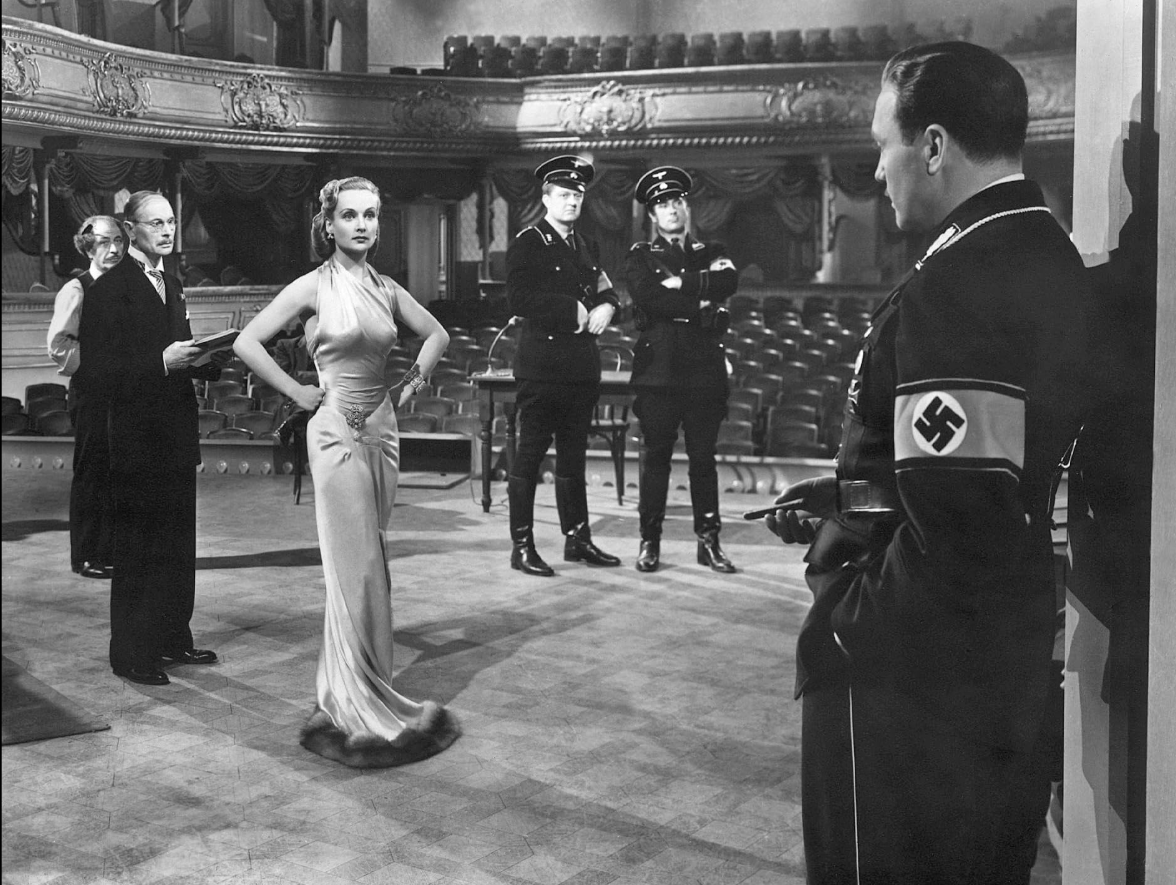
To Be or Not to Be (1942)
Written by Melchior Lengyel and Edwin Justus Mayer
Directed by Ernst Lubitsch
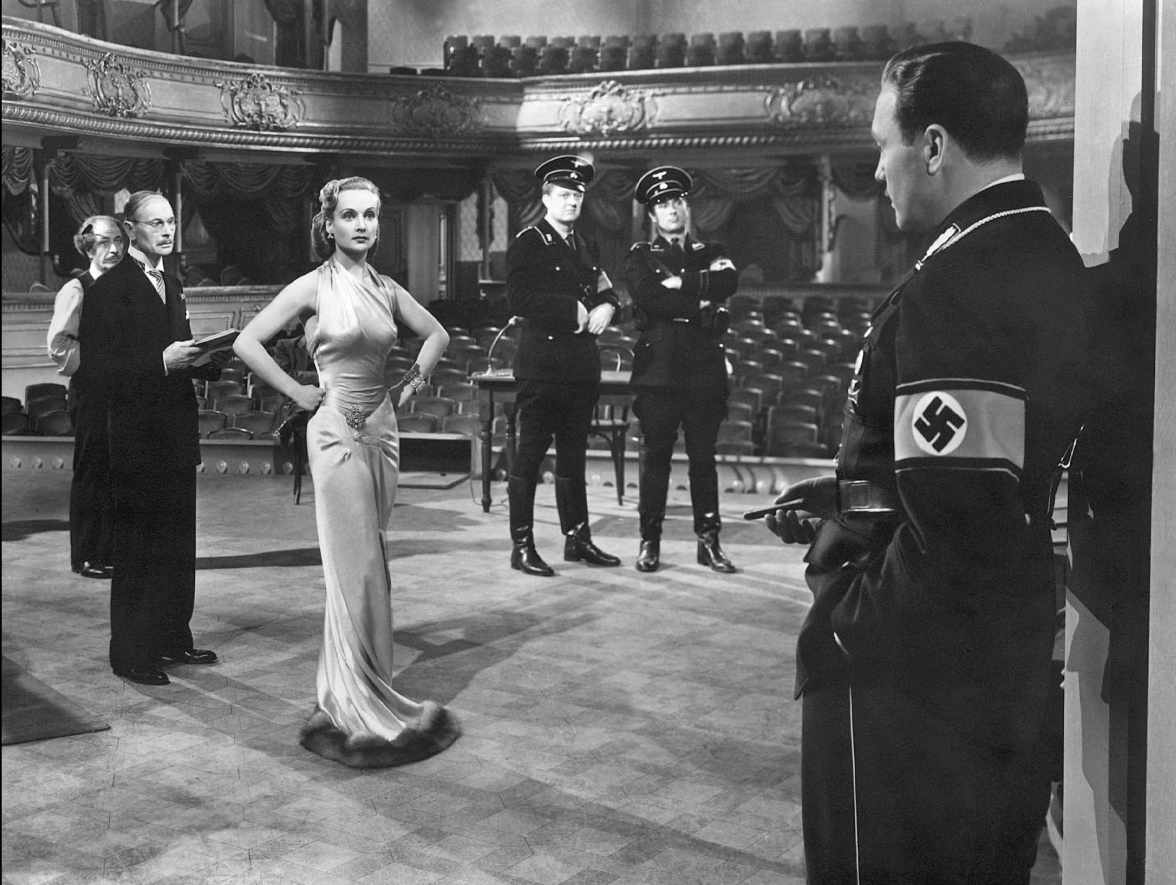
In my recent review of “Casablanca,” I pointed out that it was filled with refugees from European cinema and theater, from Ingrid Bergman to Peter Lorre to Madeline Lebeau — the young woman who tearfully sings “La Marseillaise” — to Conrad Veidt (Major Strasser), and to its writers, Philip G. and Julius J. Epstein. The hundreds of actors, writers, directors and crew who fled their native Europe ahead of Hitler’s invasions naturally came to New York and Los Angeles, where they rejuvenated the theater and cinema worlds with both an infusion of fresh talent and a strong anti-Nazi sentiment.
These talented refugees were, of course, eager to help create anti-Hitler propaganda movies that Hollywood rolled out one after another from 1941 onwards, cheap melodramas like “Underground” (1941), in which Nazis were depicted as unreservedly evil (and the cast was almost all German refugees). More sophisticated movies had slightly more three-dimensional Nazi characters. “Casablanca”’s Maj. Strasser — played by refugee Conrad Veidt, a star of German cinema who fled with his Jewish wife — is very handsome and mannered, even charming. In “The Train,” the Nazi bad guy, played by Paul Scofield, is almost as debonaire. “To Be or Not to Be” lacks a handsome Nazi; the Germans are often comedic and easily taken in by members of a Warsaw theater troupe.
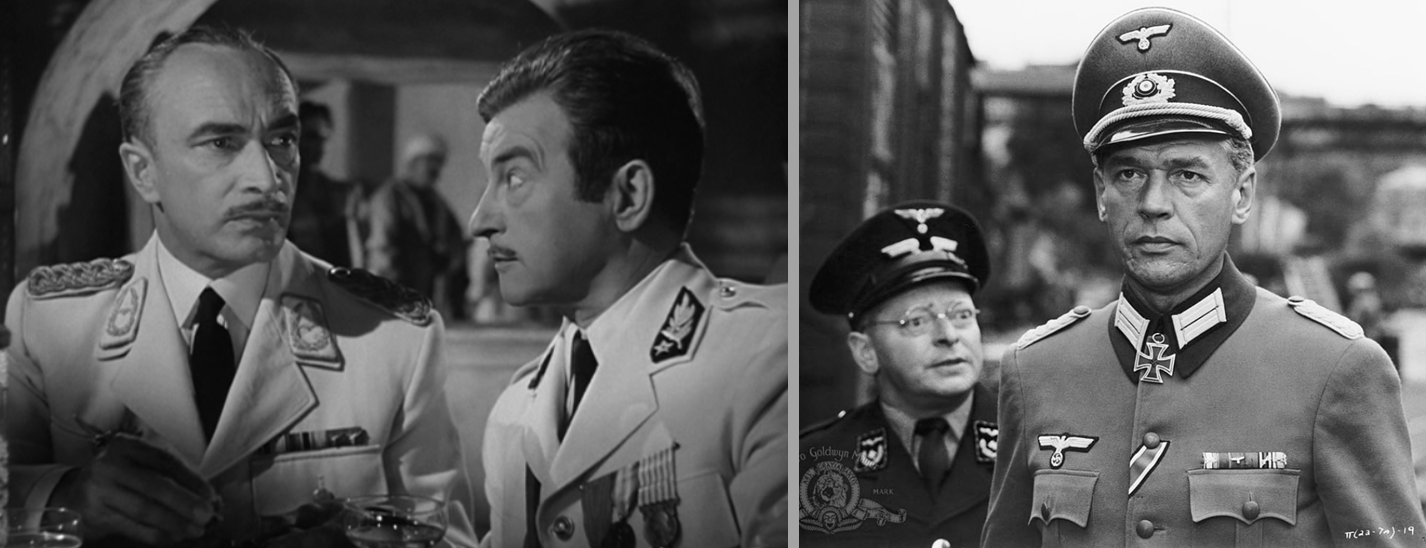
It was Charlie Chaplin — an English Jew — who created the most enduring cinematic portrayal of Hitler in “The Great Dictator” (1940). Here, the Führer dances daintily with a globe as he dreams of domination — but the globe is a balloon, bouncing comedically off his head. After that, it became difficult for Americans to think of Hitler as anything but an insufferable little twerp, infinitely punchable.
(There was another side to Hollywood’s attitude toward Nazis. As recounted in an article “Hollywood’s Confrontations with Naziism,” Hollywood studio heads — many of whom were Jewish — spent the 1930s kissing Hitler’s ass in order to preserve the German market for American films. This part of the story is ignored, while the refugees who populated Hollywood are what we remember.)
“To Be or Not to Be” shows another level of ambivalence about what was going on in Europe. In this film, which depicts the Blitzkrieg and its aftermath, the victims of the war (and the heroes of the movie) are hardly Jewish. Specifically, the film elides this question, though one of the actors in the Warsaw theater company, which in the film stands in for all of Poland, reads as Jewish. His character is named Greenberg (which seems odd for a film that opens with a joke about how all Poles have names like Lubinski, Kubinski, Lominski, and so on). Played by a somewhat spectral but dignified actor, Felix Bressart, Greenberg the character is a bit player in the company who appreciates any opportunity for a good laugh. But his dream is to play Shylock in “The Merchant of Venice” so he can utter the famous monologue that contains the line “If you prick us, do we not bleed?” (He gets his opportunity when he is arrested by the Nazis later in the movie.)
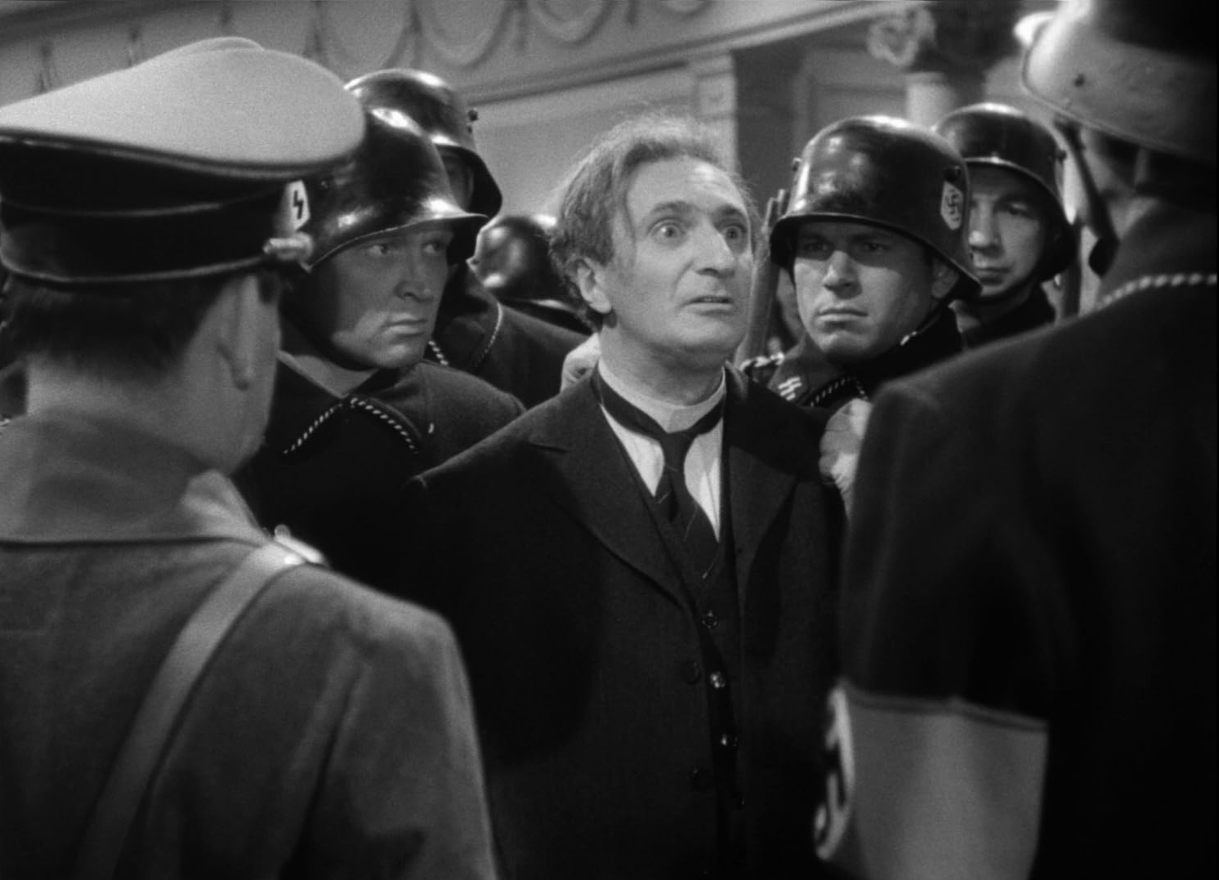
These references made the character’s Jewishness quite clear to audiences of the 1940s, but in a movie that mentions “concentration camps” — a thing that Americans had hardly even heard of in 1942 — the word “Jew” is never mentioned. The Poles could be heroes in a 1942 film, but Jews as Jews could not. They were so despised by many Americans that movies of the day could not even say the word.
The cast members — both of the theater troupe that appears in the movie, and of the movie itself — who seem the least Polish are, of course, the stars. Jack Benny (a Jewish actor, though definitely not a Polish one) and Carole Lombard (from Fort Wayne, Indiana) appear as Joseph and Maria Tura,1 Warsaw’s most famous actors. He’s vain and mediocre; she’s flighty. She has a dalliance with a Polish pilot, Sibosky, played by another American, a very young Robert Stack (who would go on to become an action hero in B-movies and eventually the FBI man Eliott Ness on television). It’s this romantic triangle that provides the engine for much of the movie’s comedy; it’s the B-plot that runs under the main one.
(Finally we arrive at a description of the film’s actual story.) When the war starts and the Nazis march into what’s left of Warsaw following the Blitzkreig, the theater company puts its skills and extensive collection of German military uniforms — before the war, they had been rehearsing a play about the Gestapo — to the service of the Polish underground. Their mission is to intercept a Polish turncoat, Siletsky (Stanley Ridges), who has a list of Polish pilots in exile flying with Great Britain’s Royal Air Force. To succeed, the theater company must deploy their arts of disguise, acting and yes, uniforms, to make fools of the Germans and save themselves.
The result is a farce that employs both Shakespeare’s strategy of mistaken identity as a source of comedy as well as a certain expressionistic use of dream logic and repetition. Benny disguises himself as the local Gestapo chief in order to interrogate the turncoat Prof. Siletsky, and later disguises himself as Siletsky to get information from the real Gestapo officer, Col. Erhardt (Sig Ruman, who appeared in several Lubitch films, and whose pop-eyed rage inspired generations of writers and actors, including the way that Col. Klink yelled at Sgt. Schultz on “Hogan’s Heroes”). Two different members of the troupe disguise themselves as Hitler at various points.
The movie has some lessons to teach us as we work to undermine fascism today.
First, although mocking satire has become a dulled weapon in today’s world — how are you going to satirize a president who behaves like a five-year-old? — we still have to use it. In my opinion it’s most effective nowadays not in movies, TV, or writing, but in live displays of derision. The appearances of giant inflatable Trumps at demonstrations draw attention, lighten the mood, encourage the crowd, and signify a refusal to give Trump what he most wants: credibility and acceptance.

Second, resistance requires small groups that trust each other and bring skills to the work. In “To Be or Not to Be,” the Germans forbid the theater company from putting on performances, so they pivot and become a resistance cell. Despite the petty bickering that they indulge in before the invasion (and which continues for the sake of lightening the mood, they work closely together against the invaders.
Hollywood could never summon the courage today to create effective anti-authoritarian movies. A viewer can find subtle notes of dissension in American films, but the financiers and corporations who back film production nowadays will never — could never — summon the courage to attack fascism. Like many newspapers, they play both-sides games. The compelling (if ultimately frustrating) movie “Civil War” (2024) was careful to disguise, and mostly leave unsaid, the beliefs, aims, or motivations of the various combatants, to an almost risible degree. The cancellation of “The Late Show with Stephen Colbert” by CBS shows why: Paramount, the corporation which owns CBS, was threatened by Colbert’s constant withering criticism of the Trump administration’s people and policies: they want the FCC to rule in their favor on a proposed merger. There’s too much money to be made.
More reading:
Jews Who Fled the Nazis to Make Films in Hollywood. The Jewish News of Northern California, 27 Nov 2014
The film makes nothing of the characters being named Mary and Joseph, which makes me wonder if their names were a joke played on Lubitsch by the Jewish writer Melchior Lengyel. ↩