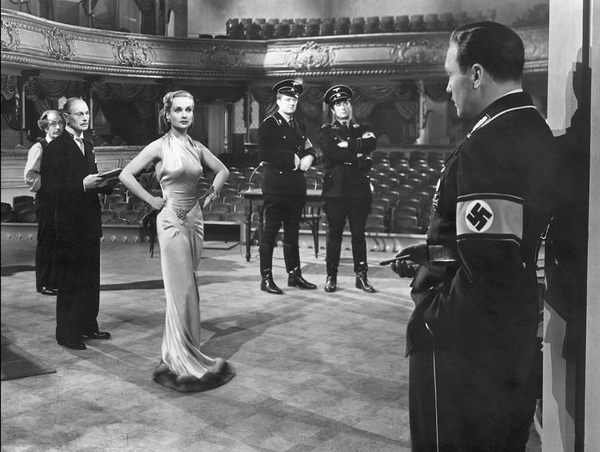
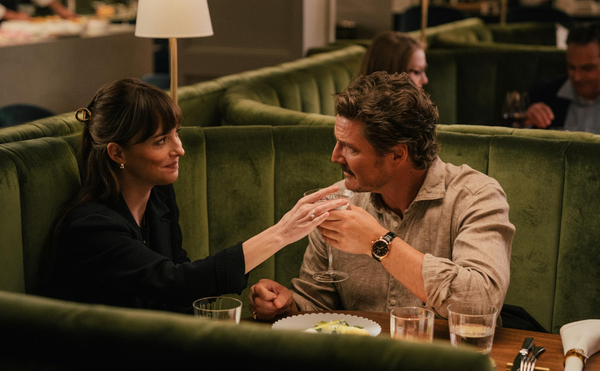
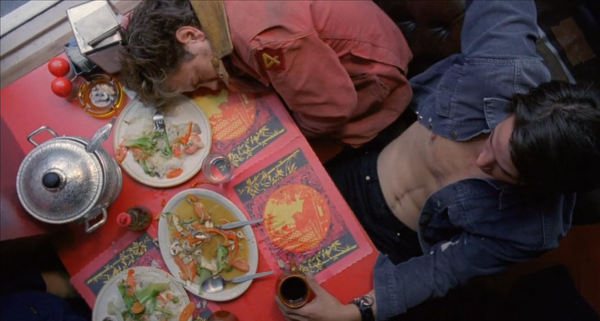
Anti-fascist cinema: Satire's brief triumph
On "The Producers" (1967) and "Cabaret" (1972): Come for the songs, stay for the laughs, leave with the shivers
The Producers (1967)
Written and directed by Mel Brooks
Cabaret (1972)
Directed and choreographed by Bob Fosse
Screenplay by Jay Presson Allen, based on works by Joe Masteroff, John Van Druten, and Christopher Isherwood1
Something I keep coming back to in this series on anti-fascism in film is that for audiences in the 1960s, World War II was, if not fresh news, then a recurrent dream or nightmare for very many adults who had survived it. Men, and not a few women, who were teenagers in 1939 or 1941 came of age manufacturing or using weapons of war; many more of all ages died from them. Fortunes were lost or made, world maps redrawn, vast populations moved. And by the 1960s, the war’s now middle-aged victors looked upon the era with nostalgia.
The reason they could afford to be nostalgic was not only because they won. They were nostalgic because the causes of the war had been ostensibly sorted out and its warring factions had mostly become friends — except for those troublesome Soviets, whose desire to “bury” the West, as USSR Premier Nikita Khrushchev promised in 1956, was nevertheless a punch line by the early 1960s. In the Sixties, aside from our nagging awareness of the side thing going on in Vietnam, the U.S. reigned supreme, and nothing threatened us.
Thus fascism safely became a joke.
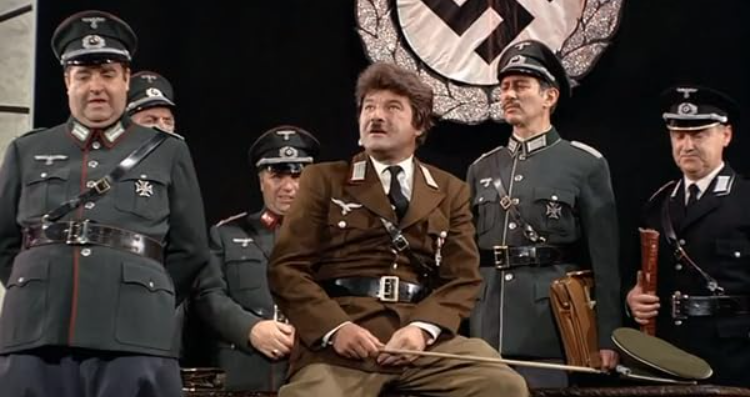
“The Producers” is not about Nazis, really. It’s about a formerly successful Broadway producer, Max Bialystock (Zero Mostel) who has fallen to depending on a coterie of elderly ladies, whom he romances in order to separate them from a few thousand dollars each to fund the production of yet another Broadway flop. He has been doing this for a long time, it seems. A timid accountant — the 1960s term to describe a weak, almost effeminate man who was nonetheless not, specifically, gay, would have been “milquetoast” — is, in the first scene, doing Bialystock’s books. Finding an error in the has-been’s most recent flop, this Leo Bloom (Gene Wilder) points out that Bialystock raised $60,0002 to produce the play, but it cost only $58,000 to actually put on; he owes the investors 3.333% of their money back. Ordered instead by the producer to hide this insignificant sum by moving numbers around, Bloom is struck by a thought:
Hmm... Amazing. It's absolutely amazing. Under the right circumstances, a producer could make more money with a flop than he could with a hit.
Hmm... Yes, it's quite possible... If he were certain that the show would fail, a man could make a fortune!
Bialystock forces Bloom to explain.
BLOOM: Well, it's simply a matter of creative accounting. Let's assume, just for the moment, that you raise more money than you need. You did this, only you did it on a very small scale. That's where you made your mistake -- you didn't go all the way. You see, if you were really a bold criminal, you could have raised $1 million.
BIALYSTOCK: But the play cost me only $60,000 to produce.
BLOOM: And how long did it run?
BIALYSTOCK: One night.
BLOOM: You see? Do you see what I'm trying to tell you? You could have raised $1 million, put on a $60,000 flop, and kept the rest.
BIALYSTOCK: But what if the play was a hit?
BLOOM: Well, then you'd go to jail.
Their fate is sealed in this moment. It’s a movie about a con artist, Bialystock — not Nazis. The Nazis are only the subjects of their subsequent search for “The worst play ever written” — a work by an unreconstructed, hardly apologetic former German soldier named Franz Liebkind (Kenneth Mars) who tends pigeons and has written a play in defense of the Fürher entitled “Springtime for Hitler.”
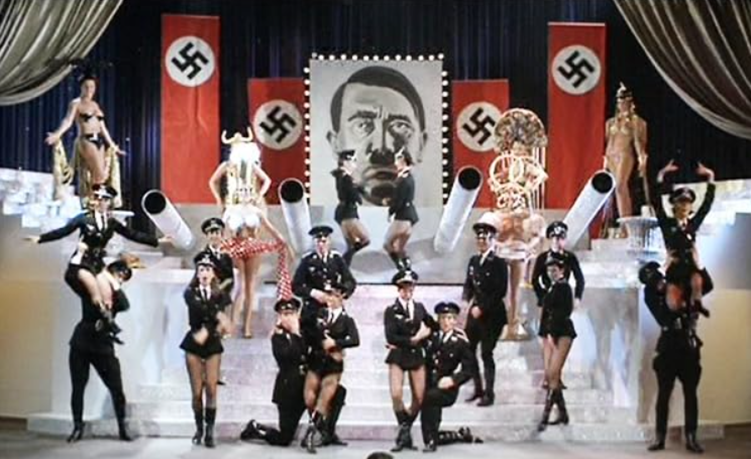
Though the schemers have chosen a work that’s guaranteed to stink, and hired a certifiable nut (Dick Shawn) to play the title character, as well as a flaming gay choreographer to stage show-tune spectaculars — the opening number leaves the audience in open-mouthed disbelief — somehow, a moment later, when Shawn’s character launches into an unintentionally comic portrayal of Hitler as a sort of beatnik, the audience finds this absolutely hilarious, and the show becomes a hit.
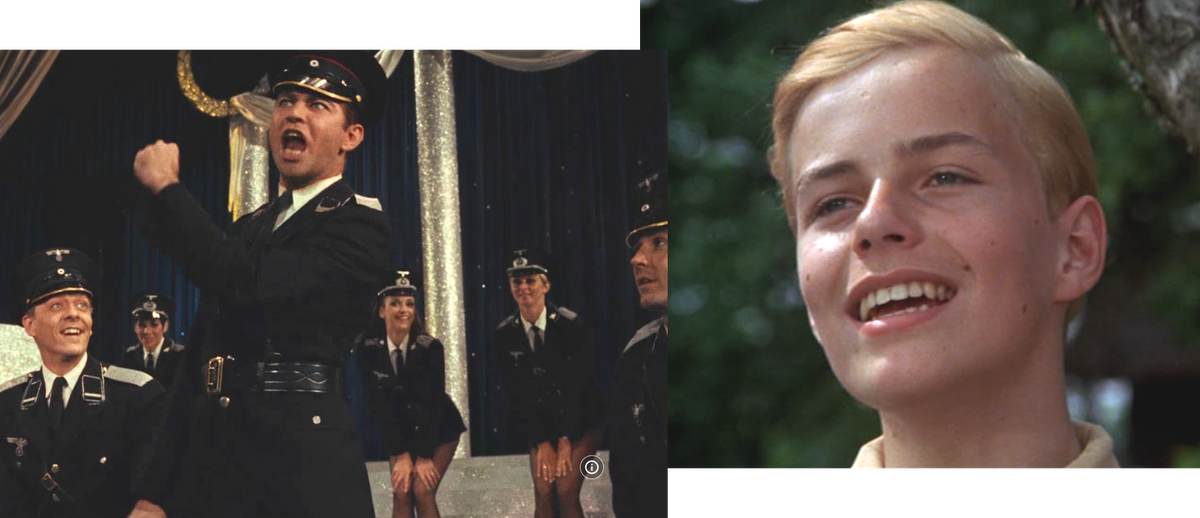
The rest of the movie becomes a little predictable, but nothing could be as funny as the opening number of the show, in which slim, dancing Gestapo officers prance alongside showgirl-mädchen wearing beer-stein and pretzel headdresses and singing:
Springtime for Hitler and Germany!
Deutschland is happy and gay.
We're marching to a fast-er pace!
Look out, here comes the mas-ter race!
It was 1967. Fascism was a joke.
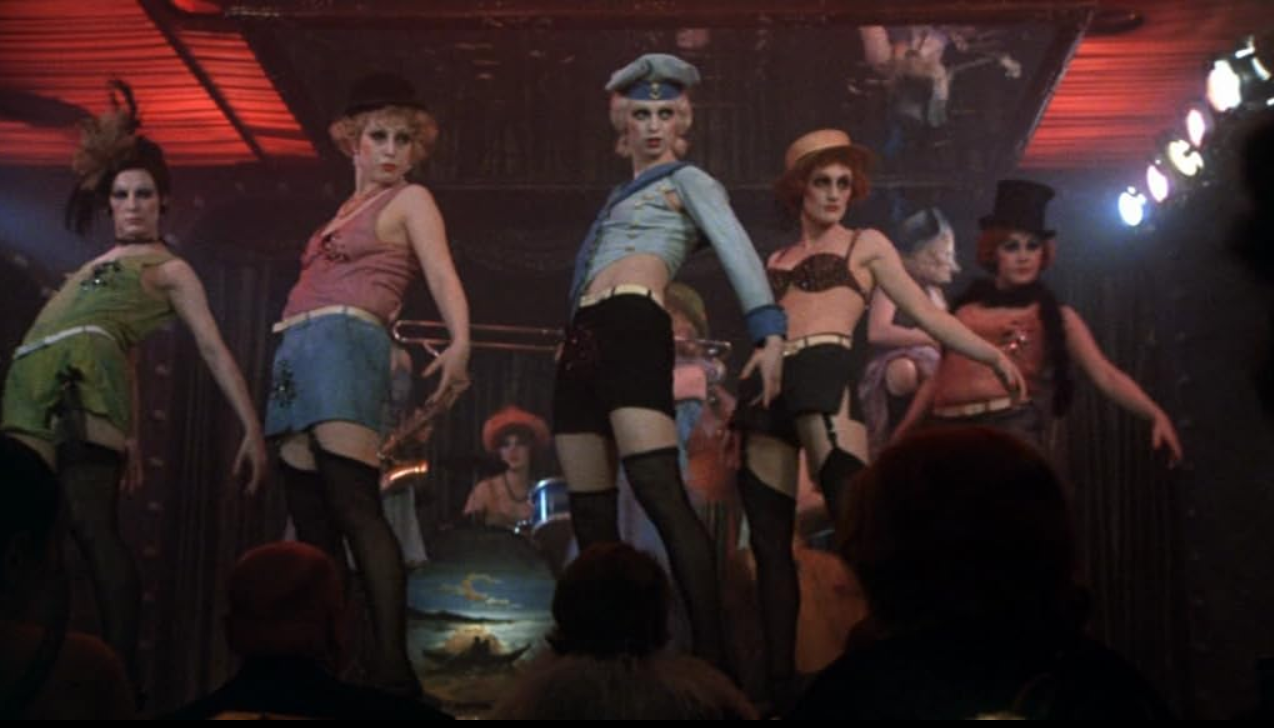
The film version of “Cabaret” came out in 1972, but the Broadway production opened in 1966, soon after Mel Brooks had finished shooting “The Producers.” Those who have seen both the show and the film of “Cabaret” know that they are different in many respects. The point of view of both works is that of Brian, a young bisexual Englishman who has naively come to Berlin for some adventure, unaware that in 1931 the Nazi Party is gaining strength amidst the economic and social wreckage wrought by the punitive Treaty of Paris and the 1929 financial crash.
But while the stage version of “Cabaret” is more focused on the household of Fraulein Schneider, the landlady who rents rooms to Brian and to Sally Bowles, among others, the film drops almost all of the story (and all of the musical numbers) having to do with Fraulein Schneider’s travails so that it can feature the singing of Liza Minelli, who plays Sally.
The primacy of the Sally Bowles character and her relationship with Brian (played in the movie by Michael York) were not the only changes made for the film version. Leaving aside the ménage à trois with Max (Helmut Griem) — a wealthy German who represents the seductive lure of thinking that despite the rise of the Nazi Party things will be all right — the film brings an unmistakable tone of sourness to the first act and of menace and foreboding to the last half.
Set in 1931, slightly later than the 1929-30 period experienced and written about by Christopher Isherwood3, the film shows how fascism was tightening its grip on German society through the point of view of Brian, who gets along by teaching English lessons. Arriving at a rooming house whose address he has been given, he is instantly adopted by Sally Bowles (Minelli), who is a chanteuse at the Kit Kat Klub. Soon after the film begins, it shows the Kit Kat Club’s manager being beaten in an alley by Nazi thugs because he had ejected a Nazi from the club. But aside from a glimpse of a vendor selling Nazi and other fascist flags, this is the only mention or depiction of Nazis in the first half.
It’s in the second half of the movie that the Nazis become more visible and threatening. Passers-by stand around the body of a man who has clearly been attacked and killed by Nazi thugs. Some of Brian and Sally’s fellow roomers begin to show Nazi sympathies. Fritz (Fritz Wepper), a striving fellow who studies English with Brian, falls in love with another student named Natalia, the daughter (Marissa Berenson) of a wealthy Jewish department store magnate; she rejects him because he is not Jewish, but this gives rise to an illuminating twist: Fritz is in fact Jewish, only passing as a Christian since coming to Berlin in order to better assimilate and succeed. Later, Brian himself is beaten up by Nazis after he disrupts them handing out propaganda.
This change, as well as the larger changes in the culture illustrated by the stomach-dropping scene where “Tomorrow Belongs to Me” is sung at first by a Hitler Youth and then taken up by the audience at a roadside gasthaus, is accompanied by a telling moment on the Kit Kat Klub’s stage: The dancers and the MC (Joel Grey, in one of the most unforgettable film roles ever) interrupt their usual frantic bump-and-grind number, fashion their felt bowler hats into Nazi helmets, and goose-step across the stage.
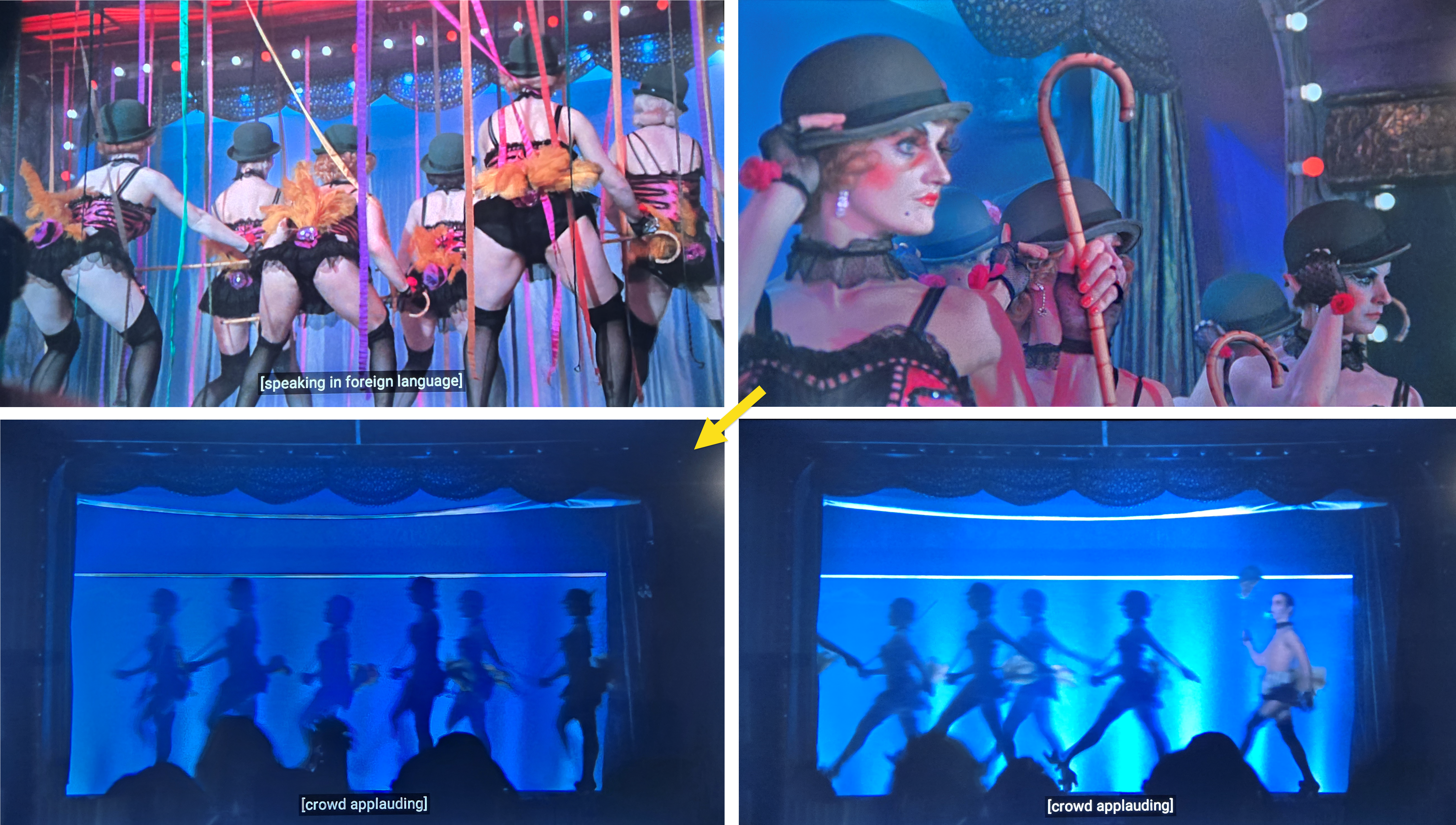
It’s an ambiguous moment. Like most of the club’s numbers (except for a few torch songs sung by Minnelli), it’s presented as satire. And yet there’s a chilling moment when you see the goose-stepping and the crowd applauds before (last image) the MC comes out leering and holding a balloon. And the scene is not offered up by itself. It’s intercut with a scene in which Nazi goons vandalize Natalia’s family’s mansion, murder her schnauzer, and write the word JUDEN in yellow paint. Given the film’s final image of brownshirts sitting undisturbed in the audience — a complete reversal from the film’s early scene of the manager throwing a Nazi out of the place — we can assume that despite the many outcasts who work at the club, including several drag artists, Kit Kat was already dulling its satirical edge, and shudder to think what happened to most of its performers within a few years.
So, by 1972, Nazis were no longer a joke.
What changed? The most obvious shift is the cultural attitude from 1966 to 1972. The optimism of the mid-1960s had given way — due to the shame of the Vietnam War, the assassinations of King, Kennedy, Malcolm X and many other black activists, and the collapse of the peace movement — to bitterness. The shift was seen in the comparison of Woodstock with Altamont, the March on Washington with Kent State, the Beatles with the near-collapse of rock and roll by 1975 (Bruce Springsteen notwithstanding). Yes, there was renewed optimism for a little while when Nixon had to resign and Carter was elected, but that was only a moment.
It’s not like the Nazis became any less funny; the “Barbie Museum” scene in the 2001 film “Rat Race”4 is a classic: a family on a road trip through the Mojave Desert makes a pit stop at a “Barbie Museum” only to find it’s dedicated to the memory of “Klaus Barbie, the Butcher of Lyon.” (If you know the Mojave Desert well, it’s even funnier; this is exactly the kind of thing you might find out there.)
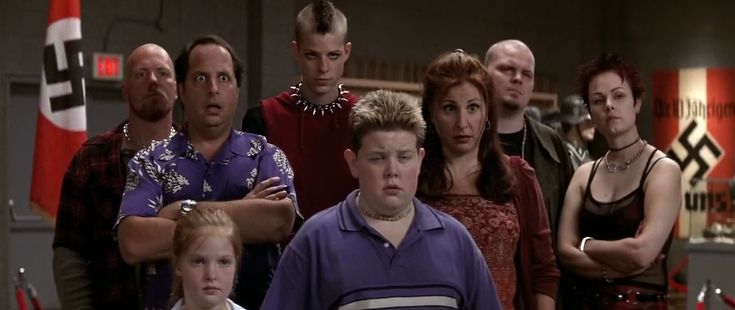
Satire can have unintended consequences, of course. The Wikipedia page for the “Cabaret” song “Tomorrow Belongs to Me” reports that neo-Nazi groups have adopted it as an anthem. (By contrast, I don’t think any have staged performances of “Springtime for Hitler.”) That’s the danger of trying to be too authentic when presenting material within a satirical or critical frame: You can’t expect everyone to have a sense of humor — especially Nazis.
Today, satire is dead. There is no room to satirize Donald Trump, Elon Musk, or so many MAGA figures — the southern football coach5 who was elected to the Senate, the Colorado bar owner6 who was elected to the House, and absolute cartoons like George Santos7, who was so nakedly criminal that even Republicans were embarrassed enough to throw him out of Congress — because their real-life presentations are so fantastic, so over-the-top, that they surpass anything that the sharpest writer could dream up.
But is there room to satirize Nazis? It depends on the audience, I guess. Last year I went to see a stage performance of “Cabaret” at a community theater in the Bay Area suburb of Walnut Creek, Calif. The liberal audience was no doubt prepared to silently disapprove of any references to fascists, but what struck me was the power of Nazi imagery no matter the context. That red, white and black flag — like that of the Confederate States of America — possesses a satanic power that clearly has not been exorcized or diminished by its adherents’ literal defeat. At this moment I wouldn’t even trust a stage production of “The Producers” to generate dread-free laughter. It’s not too soon; it’s almost too late.
To be specific: The screenplay by Allen was based on the 1966 Broadway musical, its songs by Kander and Ebb and its book by Joe Masteroff, which they based on “I Am a Camera” by John Van Druten, which was in turn based on the 1939 novel “Berlin Stories” by Christopher Isherwood. ↩
This seemingly penny-ante sum would be equivalent to $548,453.70 today. ↩
See note 1. ↩
Tommy Tuberville, R.-AL ↩
Lauren Boboert, R.-CO-04 ↩
Formerly a House member from New York’s 3rd congressional district. ↩