Metropolitan (1990)
Written and directed by Whit Stillman
Metropolitan (1990)
Written and directed by Whit Stillman
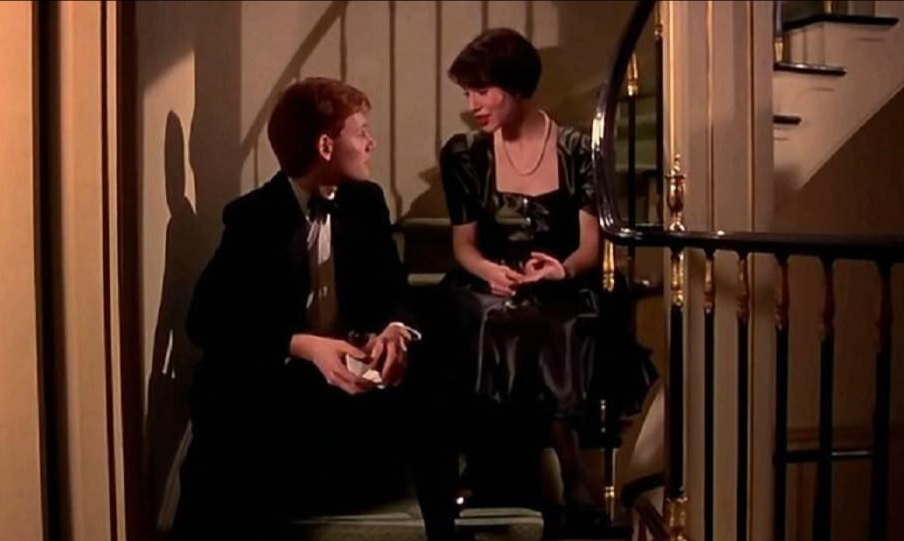
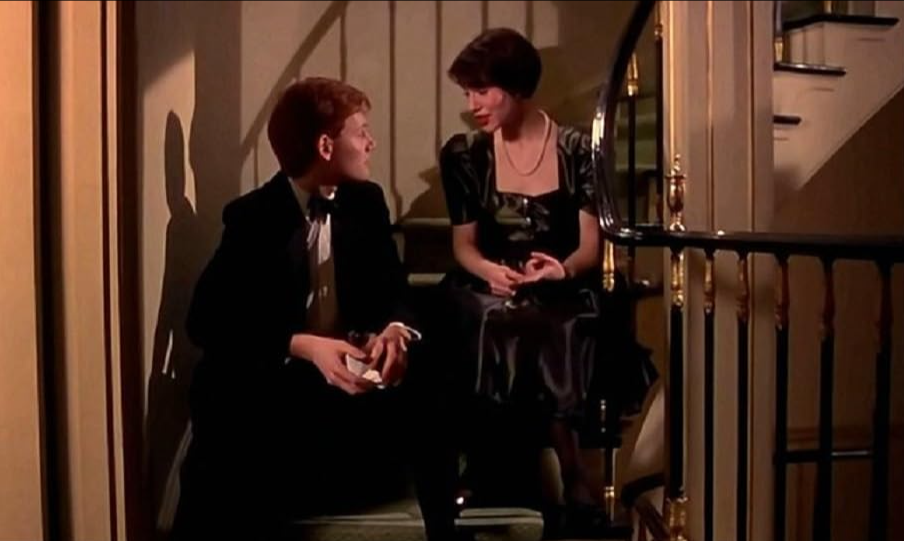
Edward Clements and Carolyn Farina in “Metropolitan”
Thanks for reading Too Beautiful! Subscribe for free to receive new posts and support my work.
I had hardly heard of Whit Stillman before I watched his 2011 film "Damsels in Distress" because Greta Gerwig was in it. I found it weird and alienating due in part to the lofty, fakey dialogue which the characters themselves seemed to think was the way people usually talked, and because they and the audience were expected to take at face value the transparently silly explanations the characters offered for mundane phenomena. (My complete take on “Damsels in Distress” here.)
Flummoxed by that experience and searching for a clue as to why he made a movie that was so bullshitty, I decided to rewind to Stillman's first film, 1990's "Metropolitan." At first I was alarmed, because this film contains some of the same conceits (or problems) as "Damsels": a soundtrack rooted in trad jazz for a movie about young people, a rarified social milieu, and a thin, merely gestural narrative. In the end, I liked this film more than “Damsels.”
"Metropolitan" draws together a bunch of rich kids during their universities' winter break, a time when -- here I had to consult other writers' reviews of the movie to understand the setting -- it's customary among their elevated social class to attend debutante balls. (To be fair, not only did these still exist in 1990, but they continue to this day, not only in New York but even in San Francisco.) But because “Metropolitan” had a tiny budget typical of a first feature by an unknown filmmaker, we don't see any of the balls themselves, merely the after-parties, in which the kids go to someone's penthouse and talk endlessly.
To leaven the group, they include in their dull little soirees an ordinary middle-class preppy named Tom. The name hints at both Tom Buchanan from "The Great Gatsby" and Patricia Highsmith's Tom Ripley, middle class men with few resources who find themselves in an upper-class stratum and make the best of it, Highsmith's character criminally.
Disappointingly, Stillman's Tom (Edward Clements) is guileless. His main attribute is not that he aspires to join the rich, but that he is blind to the starry-eyed hopes of one of the girls in the group, Audrey. Played by a first-time actress, Carolyn Farina, Audrey is gentle and sweet and wears a Molly Ringwald-style bob quite well. (Farina went on to appear in Stillman's later movies and in Martin Scorsese's "The Age of Innocence.")
The group of "Urban Haute Bourgeoisie" — a coinage by another member of the group, the pseudo-intellectual Charlie, played by Taylor Nichols — seems tight and smoothly conforming by the film's beginning, but splits up by the end, following a fortnight of nightly parties. This arc, from group cohesion to disillusion, and the frustrated romance between Tom and Audrey, provide the movie's entire narrative.
There's an interesting scene toward the end when Tom and Charlie meet a man in a bar (Roger W. Kirby) who is basically them after 15 or 20 years. The scene begins abruptly, one of several amateurish moments in this film which, according to the director1, he helmed while consulting a book titled How to Direct a Movie. Aside from this awkward moment, the scene provides a nice coda to the film's ambivalence about the upper classes. Admitting that he feels like a failure, the man goes on:
I've got a good job that pays decently. It's just that it's also mediocre. So unimpressive. The acid test is whether you take any pleasure in responding to the question "what do you do?" I can't bear it. You start out expecting something much more and some of your contemporaries achieve it. Start reading about them in the papers or seeing them on tv. That's the danger of midtown Manhattan, running across far more successful contemporaries. I try to avoid them whenever I can, but when I can't, they're always very friendly. But inevitably they ask, what am I doing?
Despite the general tendency of the characters to speak in whole paragraphs at times, the dialogue in this film is more natural than in "Damsels" because you'd expect egotistical rich kids to put up a front and talk big. More important, their vocal tone is more natural -- despite the fact that many of the actors are amateurs in their first-ever roles -- as opposed to the stilted, faux-earnest speech patterns of the characters in "Damsels." So while the two films are similar in some ways, at least this one doesn't constantly alienate the viewer.
Stillman is quoted in this 2015 article in IndieWire about coming to the set with the how-to book and leaving aspects of the direction up to the cinematographer, John Thomas, who was also working his first feature. Thomas went on to a long career shooting movies and television. ↩