Review: Bottoms (2023)
Directed by Emma Seligman, written by Seligman and Rachel Sennott
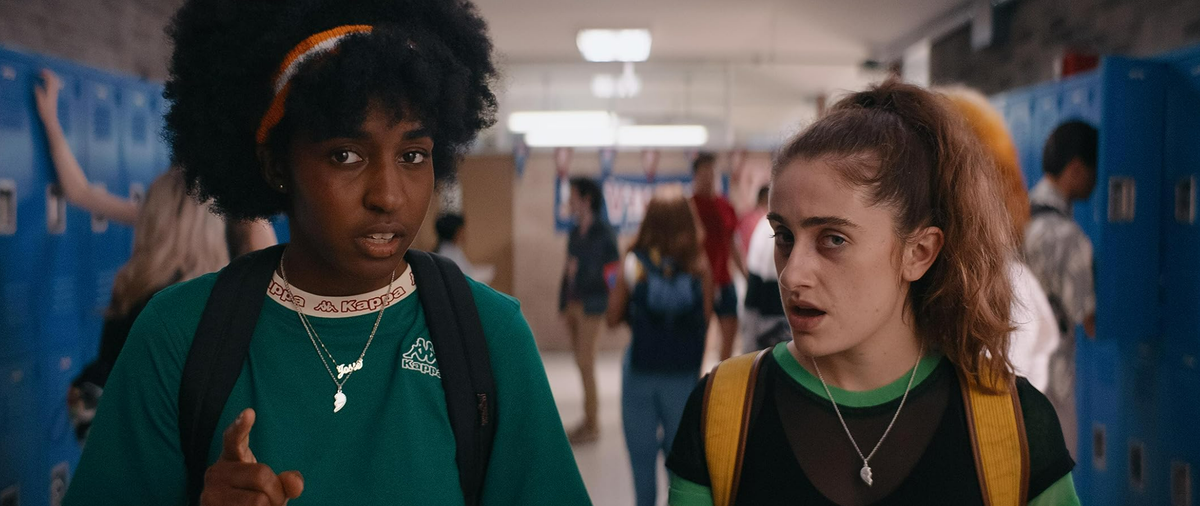
Bottoms (2023)
Directed by Emma Seligman
Written by Seligman and Rachel Sennott
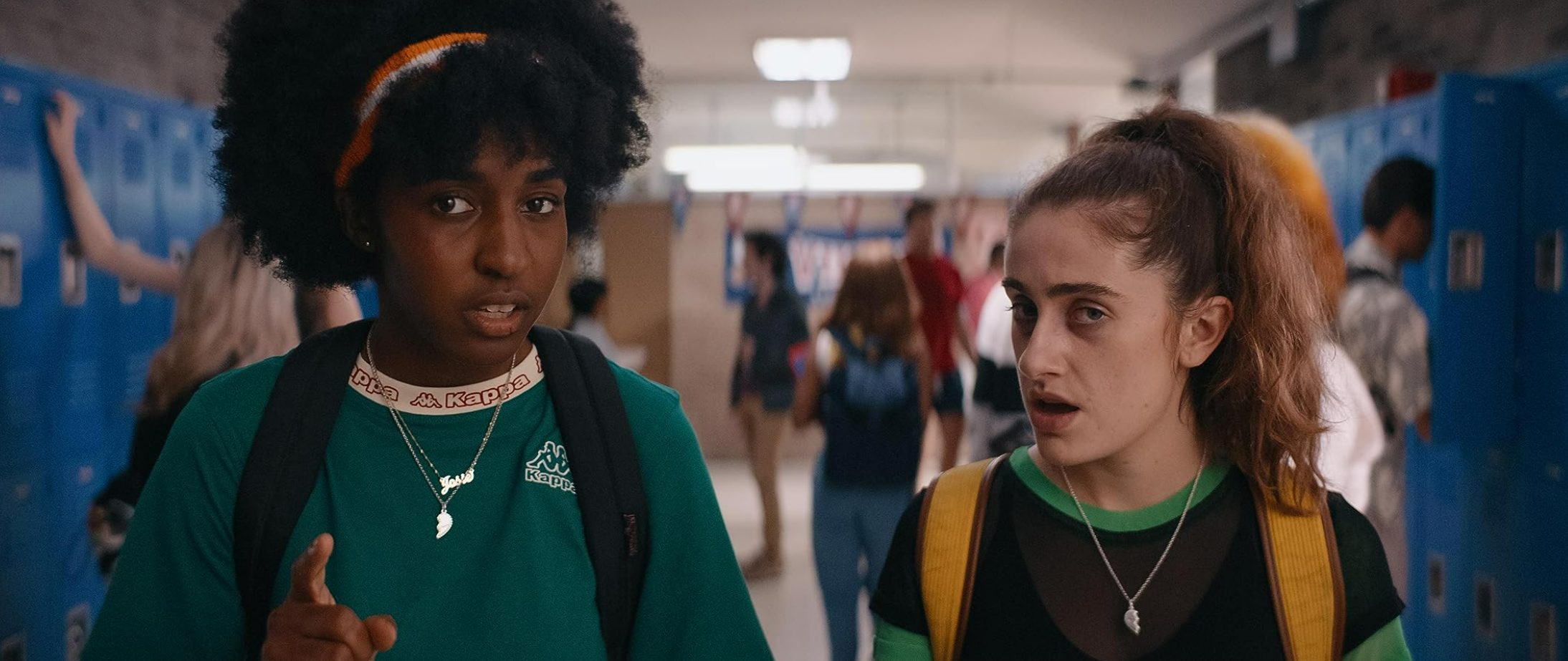
Ayo Edebiri (l.) and Rachel Sennott in "Bottoms"
Thanks for reading Too Beautiful! Subscribe for free to receive new posts and support my work.
In "American Pie" (1999), a group of high school boys vow to lose their cherries by the end of the school year. That landmark film moved the B-movie gross-out comedy into the mainstream and helped launch the careers of Natasha Lyonne, Jason Biggs, Mena Suvari, and Tara Reid. "Bottoms" has a similar premise, only with lesbians, and a similar approach: madcap action and the occasional scene of barfing or slapstick violence. The power is in the execution.
If you're familiar with the streaming series "Broad City," which ran on Comedy Central from 2014 to 2019, you'll recognize the relationship between the two main characters of "Bottoms," PJ (Rachel Sennott, who co-wrote and produced) and Josie (Ayo Edebiri).
PJ -- a short, limp-haired white girl who resembles Broad City's Abby (Ilana Glazer) down to her near-unibrow -- speaks before she thinks, then tries to bluster her way through a justification of whatever came out of her mouth. She has a streak of bitterness. Josie is gentler, taller, and prettier, but her wounds seem to run deeper. Both women wear hoodies, army jackets, t-shirts and the rest of the junky clothing of students who don't even try to compete with the more stereotypical beauties of the high school, cheerleaders on whom they have crushes.
In order to facilitate even incidental physical contact, PJ decides to start a fight club, ostensibly to empower their fellow students in self-defense, especially since a homecoming game is coming up against their school's archrivals; not only the rivals' football team but their entire student body is rumored to be violent and rapacious. The real purpose of the club is to allow them to grapple with other girls, hopefully those cheerleaders.
It's a good idea. As anyone who has been in a martial arts or dance class knows, incidental hobby-based physical contact often ends up turning into more. They're initially disappointed when the initial group of girls who show up for the class are losers like themselves; this is one of the meanings of the movie's title. But one of them -- a cheerful, resourceful nerd named Hazel (Ruby Cruz), the only "sort of cute" one -- informs PJ and Josie that a student club requires a faculty sponsor.
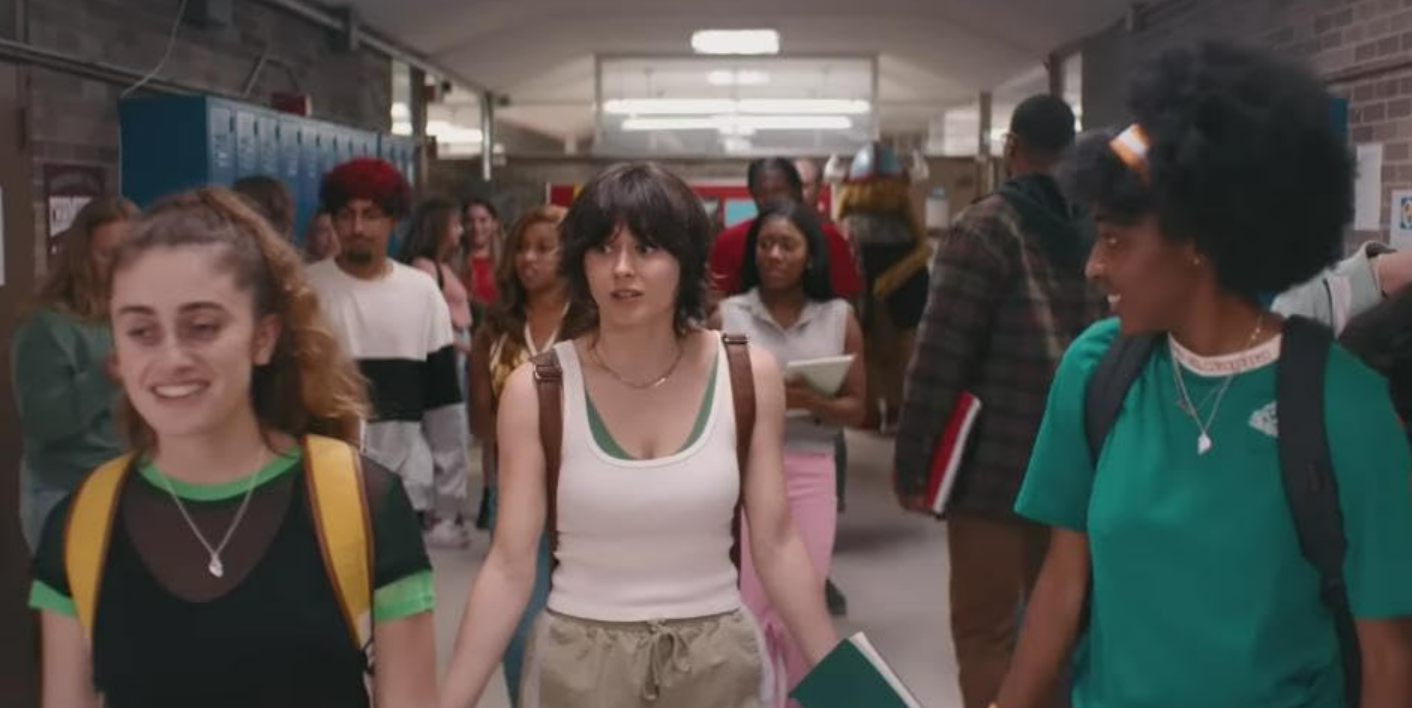
Ruby Cruz (c.)
Enter Mr. G, an enormous slacker of a teacher played by the real-life enormous pro football retiree Marshawn Lynch -- think Snoop Dogg, only about 50 pounds heavier. That Mr. G. has only a very thin grasp of whatever subject he's been hired to teach (American history?) and of his role as a teacher only makes him the perfect receptacle for PJ's flights of fancy.

Marshawn Lynch in “Bottoms“
The girls totally improvise their training, with only movies to guide them -- martial arts movies, westerns, "Fight Club" most of all. Somehow, they not only manage to give each other a modicum of confidence, if not great technique, but other girls start to attend, including the cheerleaders they long for. As the climactic homecoming game approaches, the movie has plenty of room for extensive comic set pieces. Lynch reportedly improvised much of his dialogue. The whole thing is a lot of fun.
But this movie is really about something, and it's not "FEMINISM," which Mr. G. excitedly writes and underlines on the classroom blackboard. Yes, the women experience empowerment through self-defense training, but while the experience has particular power for women, it has that effect on anyone who's previously been mocked, bullied, or oppressed. The movie's real theme is revealed during the climactic homecoming game when all the students, from the football players who sabotaged and mocked the women's club to the self-defense lesbians and losers themselves, unite to face the opposing team. Whether they have, up to this moment, betrayed each other, punched each other, or broken up with each other in front of the whole cafeteria, they unite against the interlopers who would victimize them all through the figure of Jeff the quarterback. His life is truly (though comically) in danger, but he's saved by the girls.
This is the film’s true subject: solidarity. It reminds me of a news story I read several years ago, when that fundamentalist-evangelical cult went around picketing the funerals of gay people with signs that read “God hates fags” and such. Not infrequently, a huge percentage of the population of the small town would come out to counter-protest, forming such a barrier between the cult and the site of the funeral that you couldn’t even see them. In one story I remember a local farmer saying something like “I don’t support gays, but when you attack one person in our town like that, you attack all of us. He was born here and he’s buried here. He’s ours. Don’t come in here and tell us otherwise.”
Every single comic seed that's been planted throughout the film explodes into life during the football game sequence -- so, on top of the sheer pleasure of a truly comic film, you're also watching a talented director and writer, Seligman, in only her second feature film, fully exhibit a brilliant talent. The script is tight and the frames are tight.
Looking at the resumes of Sennott and of the director, Emma Seligman -- who also wrote the script with Sennott -- there were several times I said to myself "Hmm, look at that." Sennott previously played teenaged lesbians in "Tahara" (2020, directed by Olivia Peace) and "Shiva Baby" (2020, also written and directed by Seligman). Both films, judging by the trailers, are set at a Jewish funeral. Finally, Sennott and her costar Ayo Edebiri previously honed their joint comic timing in a three-episode Comedy Central miniseries in 2020, "Ayo and Rachel are Single."
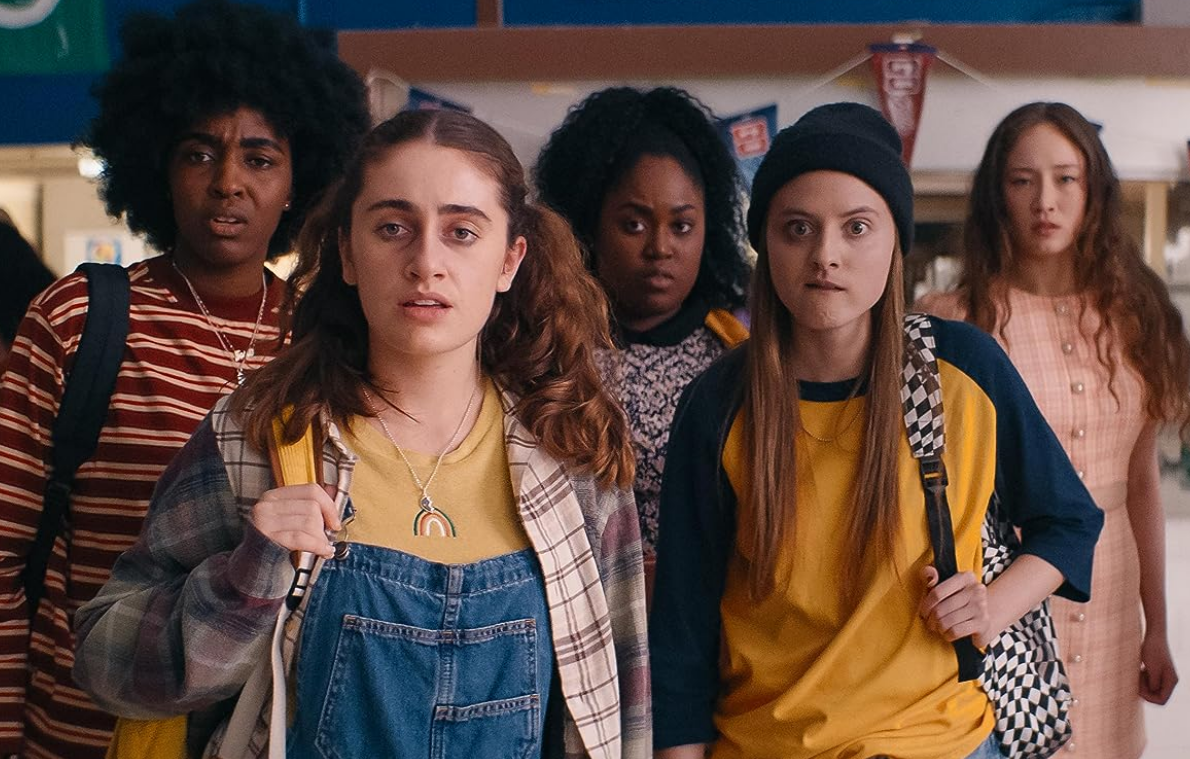
From left: Ayo Edebiri, Rachel Sennott, Zamani Wilder, Summer Joy Campbell, and Havana Rose Liu
In addition to the stars, props go to a couple of minor characters who are ridiculously funny in every scene they appear in. Wayne Pére as the principal is sweaty, dripping with malice, barely contained as the school's principal. Summer Joy Campbell plays to perfection Sylvie, a stoner girl with a crazed expression known as a paint huffer. When asked what her goal for being in the self-defense class is, promptly answers, "Kill my stepdad."
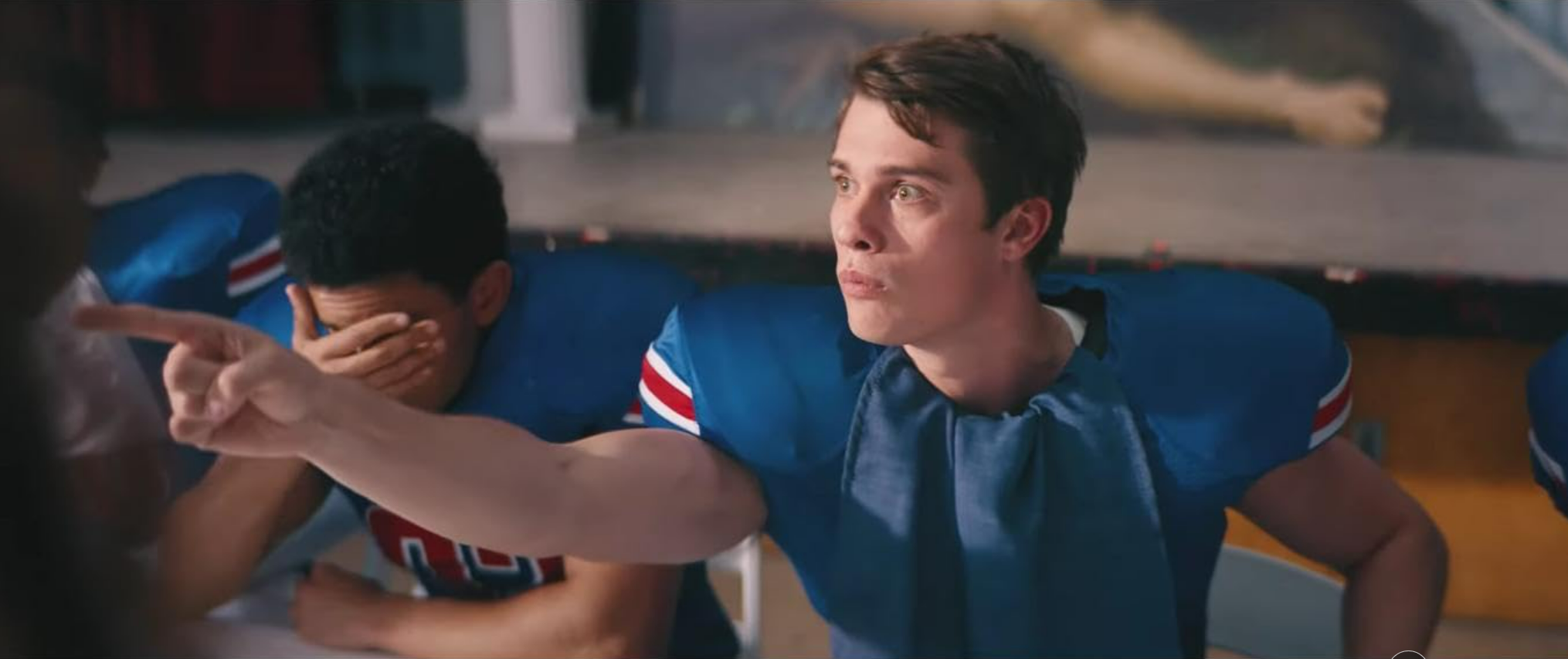
Miles Fowler (l.) and Nicholas Galitzine
Finally, a word about that quarterback. Jeff (hilariously overplayed by Nicholas Galitzine) is a macho golden boy who is really a snowflake. He practically faints at physical contact and likes emo pop. He's also a narcissist for whom anyone else hardly exists. As a character he would set off anyone's gaydar, and I wouldn't have been surprised if at the end of the film he planted a big kiss on his worshipful teammate Tim (Miles Fowler, who shows a lot of range in a relatively small but sinister role). That didn't happen, but I will say the actor has already done two other features in the last couple years with a gay storyline, probably because the guy is very pretty. So if we see a sequel, there's something to hope for.
Thanks for reading Too Beautiful! Subscribe for free to receive new posts and support my work.