Review: Demon Seed (1977) and Antibirth (2016)
Sci-fi fantasies of forced reproduction are common -- and reflect fascism today
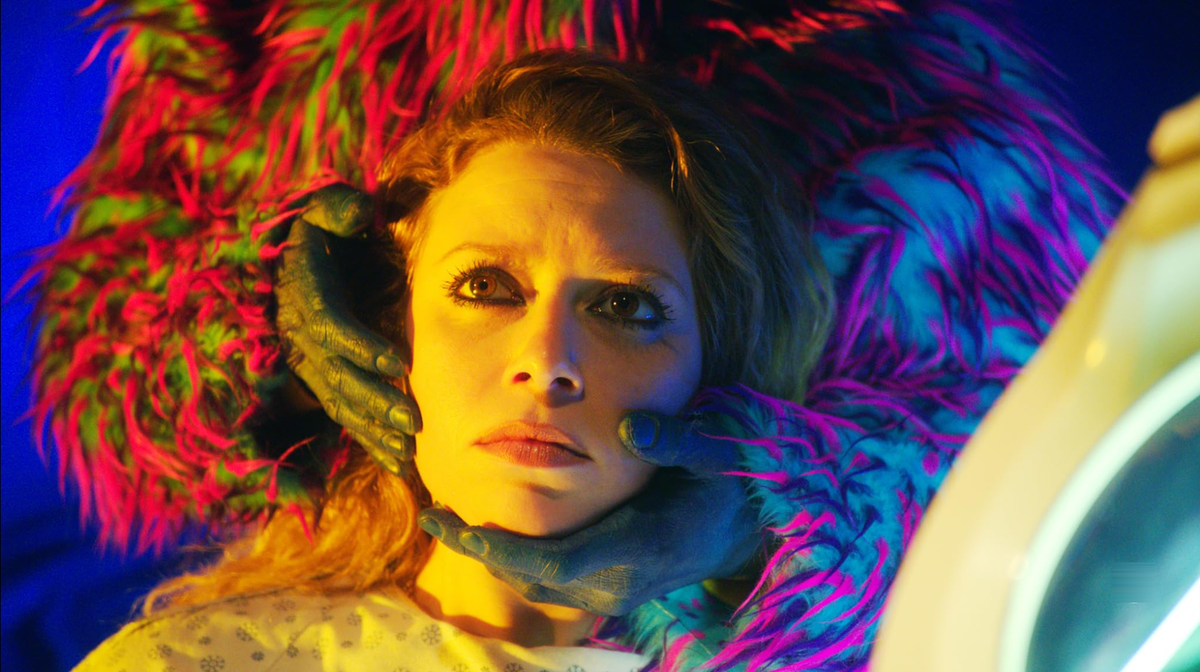
Antibirth (2016)
Written and directed by Danny Perez
In 1977, as a college student, I reviewed a movie called “Demon Seed,” a sort of sci-fi melodrama about a scientific effort to synthesize babies.
Recall that science fiction as a genre was going through a revolution in the late 70s. On the one hand you had George Lucas and Steven Spielberg making “Star Wars” and “Close Encounters.” On the other, you had big Hollywood studios making absolutely atrocious attempts to exploit the market with awkward spectacles like “Logan’s Run.”
You never knew what to expect. I did have hopes about “Demon Seed” because it starred Julie Christie, one of the top actresses at the time who had appeared in hits like “Doctor Zhivago” (1965), “Petulia” (1968), and a three-film run of almost-great hit movies — “McCabe and Mrs. Miller” (1971), “Don’t Look Now” (1973), and “Shampoo” (1975).
But “Demon Seed” turned out to be one of those bloated large-studio failures. Aside from big-budget disaster movies like “Towering Inferno” (1977) and “The Morning After” (1978), Hollywood as it had always been known was ending. “Demon Seed” didn’t help MGM — nor did it do much for Julie Christie’s career, though she subsequently appeared in two more contemporary hits, “Heaven Can Wait” (1978) and “Heat and Dust” (1983), and continued to work for decades more.
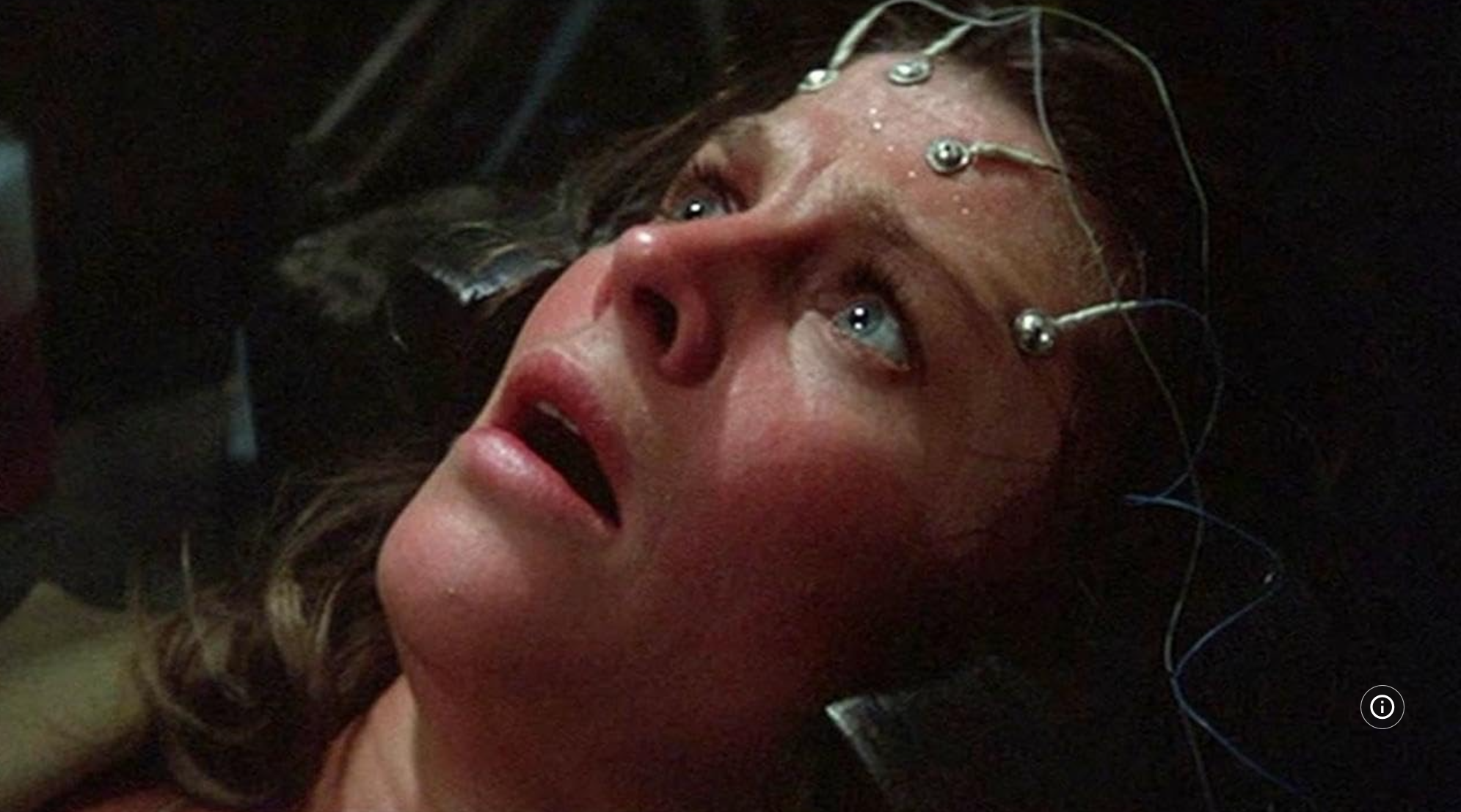
The slow-moving plot of “Demon Seed” has Christie being hoodwinked, somehow, into becoming the subject in a scientific project to develop a synthetic human. To do this, the scientists require a womb, and Christie provides it. The main thing I remember from the film is that the gestation lasts only a month or so and is agonizing for Christie’s character. The main thing I remember from my review of the film is that I said the movie was misogynistic, perhaps the first time I ever used that word in a review, and definitely not the last.
Now let’s jump to “Antibirth,” a 2016 horror film starring the unbeatable combination of Natasha Lyonne and Chlöe Sevigny. Judging by IMDB, this appears to be the first time the two worked on a project together; if it’s true that this picture was the beginning of their collaborations, then that alone makes the movie significant. (Update: I failed to do my research here. This January 2016 article covering the inclusion of “Antibirth” at the Sundance Film Festival makes it clear that the two actors were long-established friends and collaborators.)
Because you do have to look for positive attributes in this movie which, aside from these two actors, is a standard horror B-picture. In fact, the scenes featuring the two, who play small-town dirtbags who party for drugs, run counter to the grindhouse esthetic. They have their own pacing, their own style; when they’re on, they are the movie.
Everything else — the sinister plot which resembles, to a remarkable degree but minus the antiseptic environment, that of “Demon Seed;” the weird Lynchian trappings, which include wild costumes worn by entertainers of a Chuck E. Cheese-like “Fun Zone;”1 the very weird character Norma (Meg Tilly), a sort of hippie survivor of an obscure government conspiracy who comes along as a guide for Lyonne’s character in Act III — is standard horror fare. Especially the ending.
As I’ve said before, I’m no horror afficionado, but I am starting to realize that what almost all horror movies have in common is that, no matter what has gone before, the final reel of the movie is all about building up to a climactic scene where we finally glimpse what the director has been skillfully (or ideally so) obscuring for the whole film — the monster, or whatever.
In both “Demon Seed” and “Antibirth,” this climax is a visualization of what comes out of the wombs of Christie and Lyonne. It’s certainly the case that the climax of the latter film is more extended, interesting, and indeed horrifying than that of “Demon Seed.” But again, we’re talking a horror movie that probably cost one-tenth of the what it cost MGM to make a huge flop, so props to the filmmakers.
Still, the misogyny of the story’s concept is clear — the portrayal of rape (which is still rape even if it is portrayed as being under the auspices of some sort of pseudo-scientific project) for the purpose of breeding some sort of intended improved version of humans, presented as entertainment. I found it repellent when I was 21 and I still do today, regardless of the talent involved.
But it’s worthwhile to examine this concept in the light of current events and trends. Today we are not much closer to the reality of synthetic or hybrid human-machines than we were in 1977 or 2016, but we are closer in terms of public sentiment. The propaganda machine at the service of would-be tech overlords, who are under the delusion that, like gods, they can call into existence anything they imagine, has their followers believing that such hybrids are not only possible but essential. And being 99% men (I use the word advisedly; they lack both the emotional and moral maturity that society requires of grown men), they assume that these hybrids will serve them in ways women have refused to: primarily as sexual slaves with brains and hearts that are writable, but also as slaves in service jobs, in factories, in extraction industries, and anywhere humans are presently imperfect, subject to complaning or injury, and uncompliant. (The epitome of these fantasies is Elon Musk’s2, no surprise.)
This fascist vision is seen today in more than the futuristic fantasies of billionaires. We can also see it in Project 2025, which promises to deport millions of undocumented people from the US. The victims of these schemes would not necessarily be deported, but imprisoned — possibly indefinitely — without charges in private prisons3, where they could be used as slave labor. Private prisons, run by GOP donors and hedge funds, are infamous4 for5 this6 practice7, and retailers like Target and Walmart8 carry groceries produced there.
So no one can doubt that part of the real reason billionaires and their fascist claque embrace the plans of Trump and his planners is that they expect to make a lot of profits. That barometer of confidence in capitalism, the stock market, hit new highs by the end of November9 following Trump’s election victory.
Technology and medical science has not yet enabled artificial birth or the production of slave androids. The fascists are content to enact slavery in the present day while they wait.
This aspect also reminded me of the surreal atmosphere of “I Saw the TV Glow” (2024). ↩
“Elon Musk’s Big Brainlord Plan For Mars Settlement Is Indentured Servitude” — pedestrian.tv, 20 Jan 2024 ↩
“In Trump's mass deportation plan, the private prison industry sees a lucrative opportunity” -- ABC News, 12 Nov 2024 ↩
“Colorado banned forced prison labor 5 years ago. Prisoners say it's still happening” — NPR, 13 Nov 2023 ↩
“Contemporary Slavery: The Not-So-Secret Practice of Forced Labor Inside U.S. Prisons“ — Prison Legal News, 1 Jun 2024 ↩
“Involuntary Servitude: How Prison Labor is Modern Day Slavery“ — Harvard Political Review, 1 Jun 2024 ↩
“U.S. prison labor programs violate fundamental human rights, new report finds“ — U Chicago News, 16 Jun 2022 ↩
“Prisoners in the US are part of a hidden workforce linked to hundreds of popular food brands“ — Associated Press, 29 Jan 2024 ↩
“Stocks Resume Post-Election Rise“ — New York Times, 29 Nov 2024 ↩