Review: Nosferatu (2024) and Nosferatu (1979)
The new version updates the story to modern horror standards for a new generation, while the Werner Herzog classic is more poetic and insightful
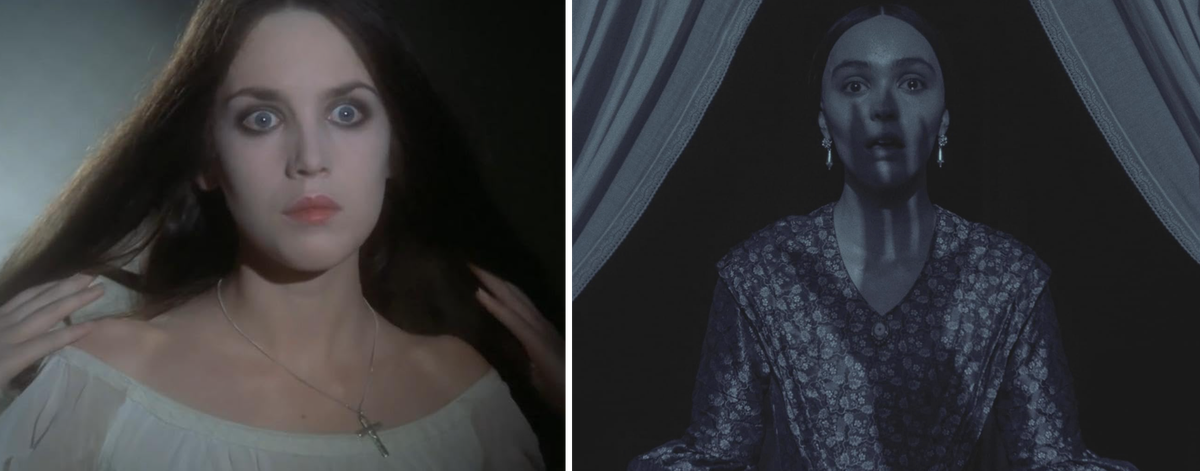
Nosferatu (2024)
Directed by Robert Eggers
Co-written by Eggers and Henrik Galeen
Nosferatu — Phantom der Nacht (1979)
Written and directed by Werner Herzog
What is a vampire? A human parasite that lives off the blood of living things; an undead, formerly living human being; anyone who sustains themselves by stealing another’s energy, leaving the victim exhausted. Billionaires are vampires; so are casinos, propaganda networks, and capitalism as a whole. Also fascist dictators who drain the riches of a nation and then, like Bashar Al-Assad, flee with the spoils.
Clearly the vampire is a creature of today. How else to describe Donald Trump, who cheats and fleeces his own followers and employees, whereupon he not only escapes any punishment or consequences, but fleeces the same people again and again? How else to describe Harvey Weinstein, who raped vulnerable women for 30 years and got away with it (until, thankfully, he didn’t). How else to describe Henry Kissinger, who advised presidents for 30 years, leading them to commit hundreds of thousands of murders, and died comfortably in his bed?
In 1922, German filmmaker F.W. Murnau — later to be regarded as the greatest German expressionist filmmaker — adapted Bram Stoker’s novel “Dracula” to the screen. Murnau reset the novel’s English characters and settings in Germany and added the element of shipborne rats bringing the Black Plague to a German seaport. Given the post-WWI era in which it was made, when the German economy was a shambles and everyone was looking for someone to blame, the film invites viewers to see a theme of threatening outsiders invading in droves from Central Europe to sully and destroy the comity of German life and culture. From this view, it’s only a short jump to seeing the rats as invading Jews.
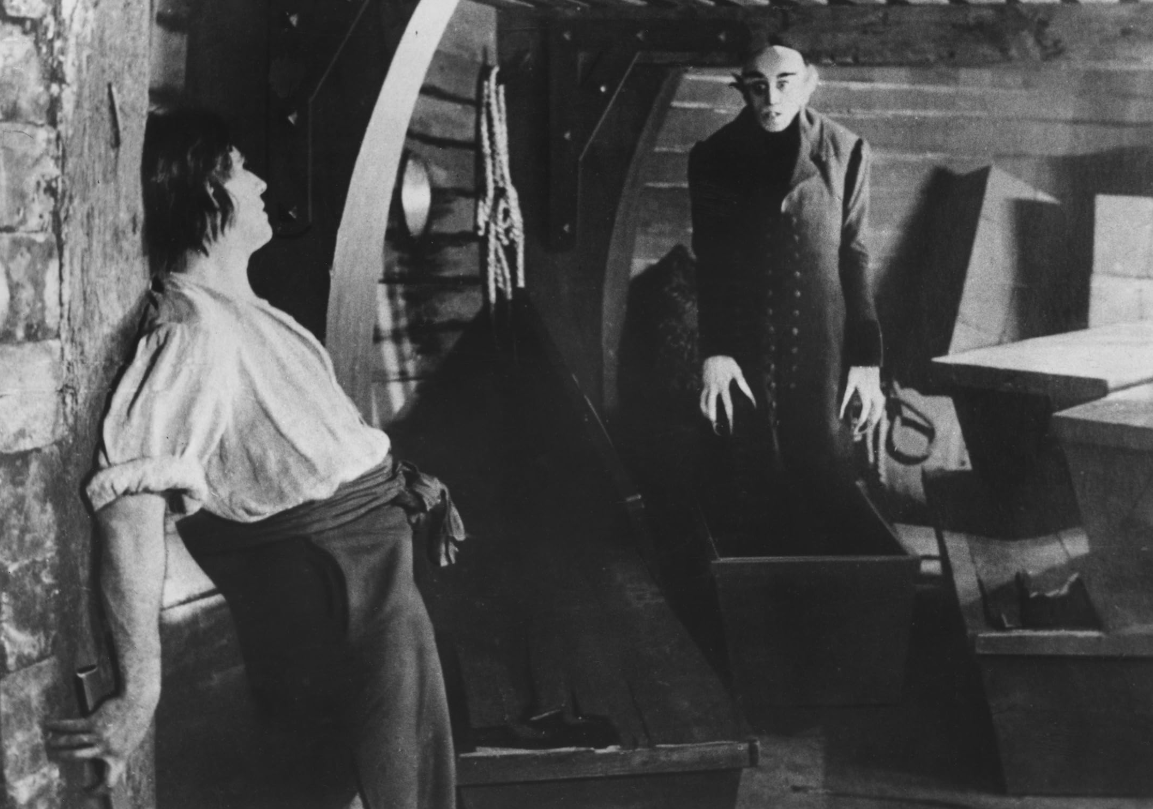
There are other ways to interpret Murnau’s film — including a queer reading that acknowledges Murnau’s homosexuality — and this article would get too crowded if I were to discuss not two but three movies titled “Nosferatu.” For our purposes, it’s enough to note that both the 1979 version by Werner Herzog and the 2024 version released this week have almost the same plot, settings, and characters (some with different names), taken not from the novel but from Murnau’s 1922 film. (Update: You can watch the Murnau masterpiece on the Kino streaming platform.)
The story they have in common is this: A real estate agent in a small, prosperous German seaport tells a subordinate that an eccentric Transylvanian nobleman wants to purchase an abandoned manor house and retire there, relocating from his Central European castle. The subordinate, named Harker (novel and 1979 version) or Hutter (1922 and 2024 versions), must journey to the castle and have the Count sign the papers, and upon his return receive a lavish commission and promotion. His wife Lucy/Ellen has a premonition that the journey will put him in mortal danger, but driven by ambition and a certain identifiable streak of Protestant work ethic, he departs.
After being warned again by villagers who live in the vicinity of the castle, he is welcomed by the Count, named Orlok by Murnau and Eggers and Dracula by Stoker and Herzog. Here the 1979 and 2024 versions vary. In Herzog’s telling, Dracula signs the contract for the German manor and then bites Harker, rendering him ill. Eggers has Orlok presenting his own legal form, written in an impenetrable dead language, and insisting that Hutter sign it as well; he proffers a generous tip. Hutter also falls ill. This departure from previous versions contributes a plot point later, but in the end the difference isn’t much.
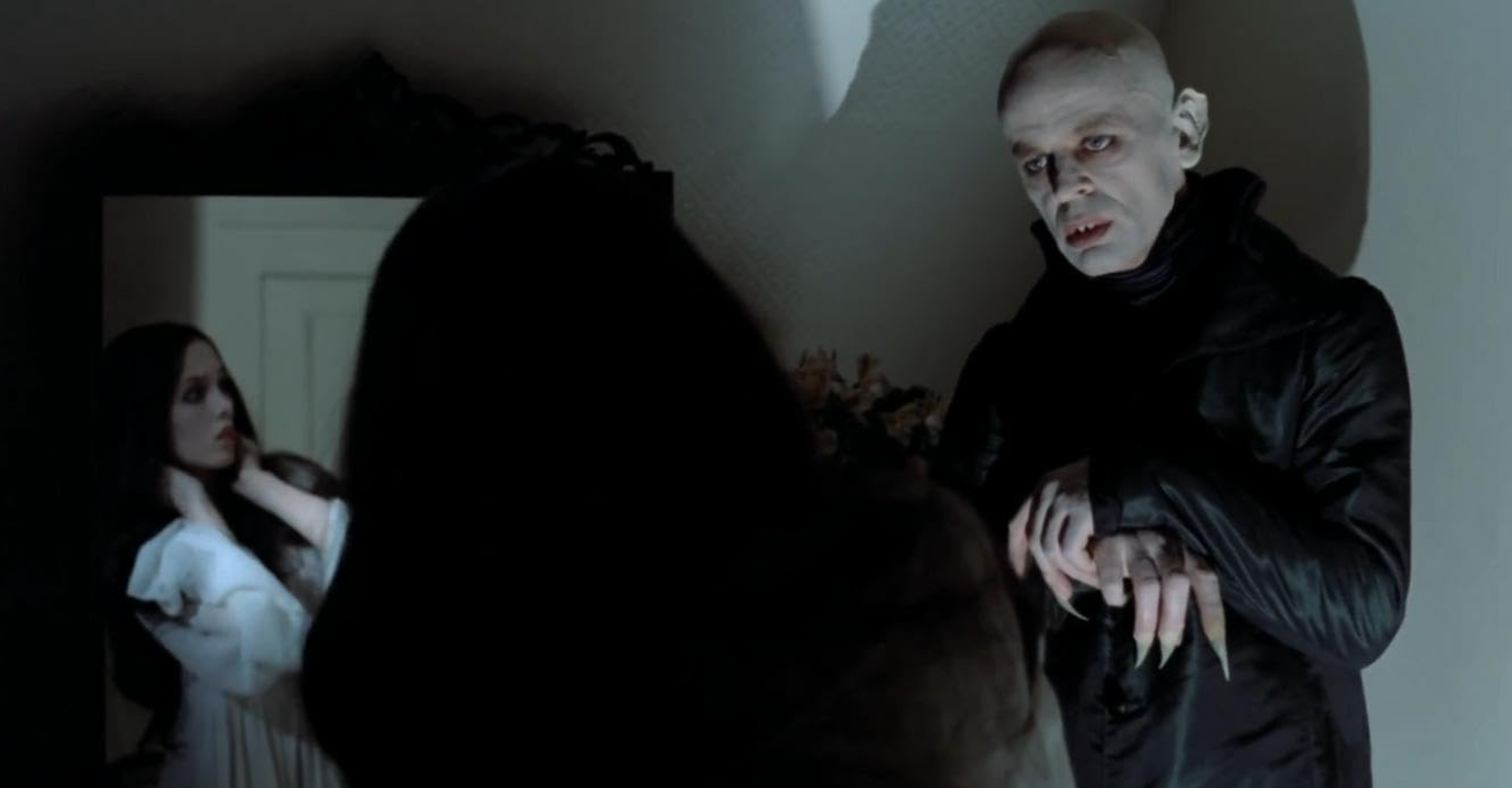
In all versions, the Count glimpses a locket carried by Harker/Hutter with an image of his wife. In his own way, the vampire falls in love with her, and her premonitions return. The Count and Harker/Hunter race back to the German town, the Count hidden in one of several coffins of Transylvanian soil and accompanied by hundreds of plague-bearing rats which infect the town on arrival. After much haunting and scenes of chaos in the plague-stricken town, Lucy/Ellen reads the manual and decides that only she, a “woman of pure heart,” can defeat the vampire.
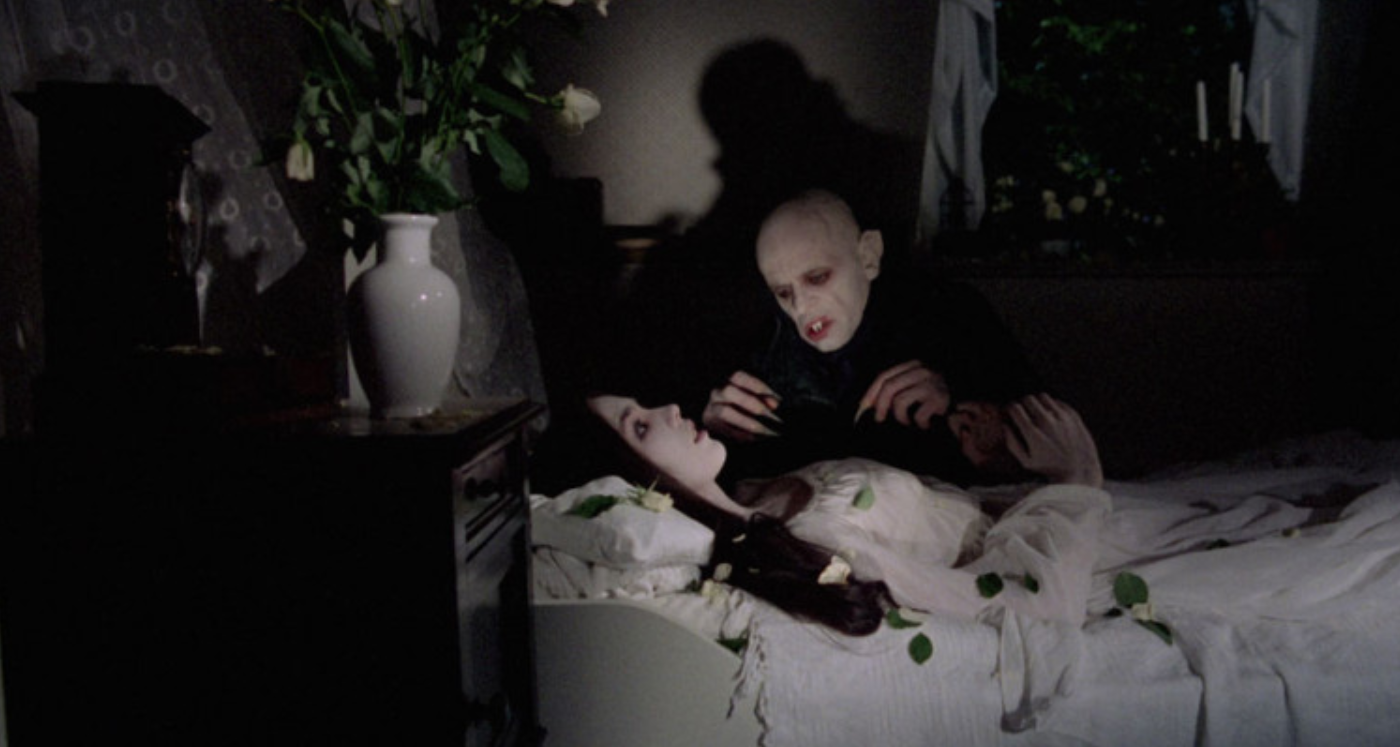
Readers are very likely to be familiar with the Herzog version, an acknowledged classic of world cinema, in which the inimitable Klaus Kinski stars as the vampire. (The version available for streaming in the U.S., unfortunately, comes only with an English-dubbed soundtrack. For now, if you want to see the movie in the original German, you’ll have to find a DVD or Blu-Ray.) This film is shorter and more direct than the new version. For example, the scene where Harker receives the commission to travel to Dracula’s castle is about 12 lines of dialogue, while the same scene in the Eggers film goes on for at least twice as long.
The flowery language that extends every scene is only one aspect that makes the new version too long. A rule of thumb that Eggers seems to rely on is that if you can make a scene more lengthy by adorning it with heaps of baroque touches and the maximum number of shadows to create the proper atmosphere of a horror movie, then do it. Eggers intentionally made a horror film, complete with the requisite thundering soundtrack, flowing blood, and crushing atmosphere of dread. One thing this accomplishes is making the figure of the Count much more frightening and powerful than Herzog’s because he seems genuinely more connected to an occult evil. His physique, courtesy of the actor Bill Skarsgård as well as the heap of fur he wears, is more threatening. This Nosferatu is the image of the hulking, sadistic cannibal-prince of the Marquis De Sade’s “Juliette.”
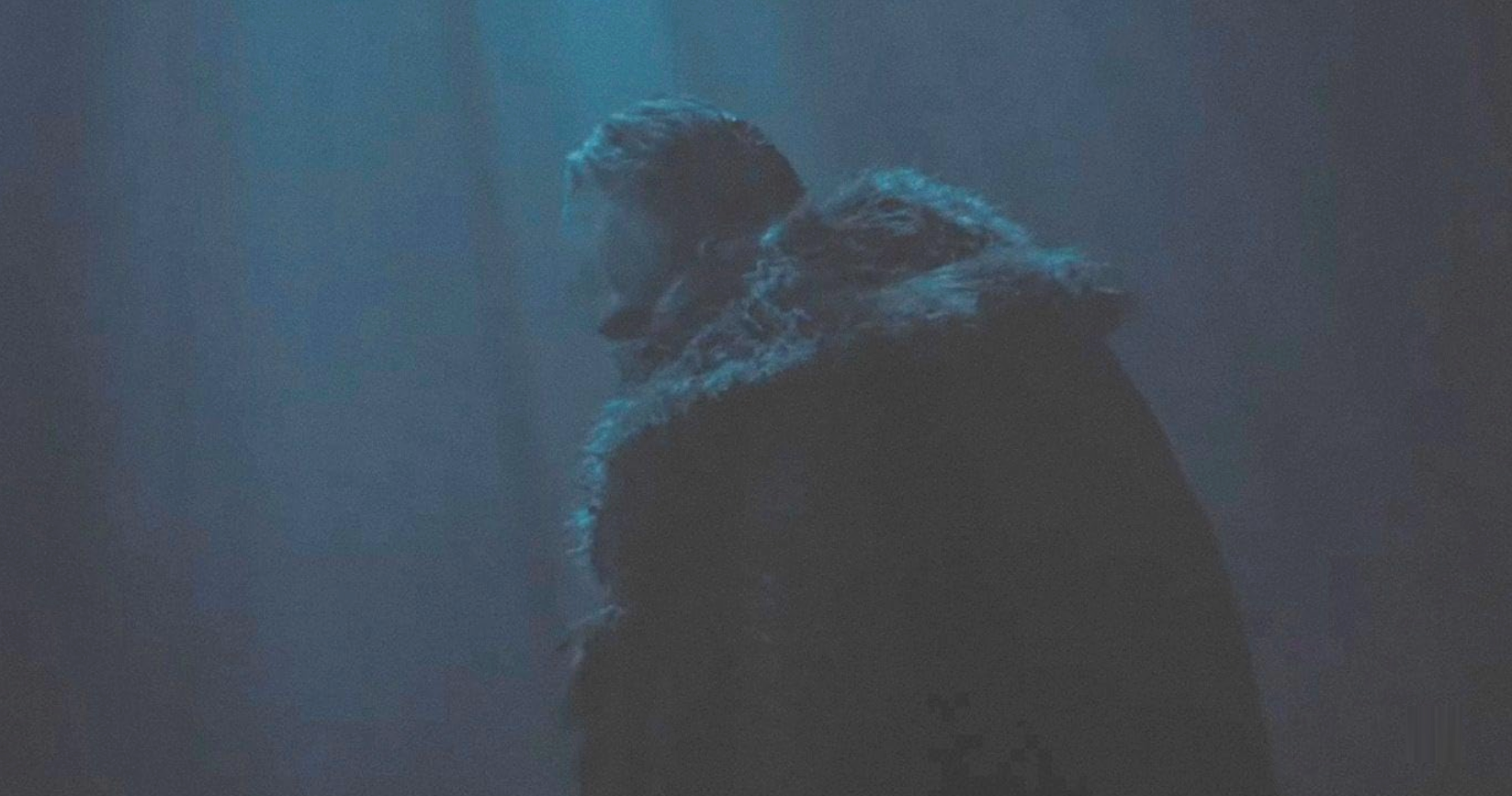
Kinski’s Nosferatu, by contrast, is sickly-looking. Though he exhibits great strength in one scene where he casually carries a coffin full of dirt under one arm, he generally appears vulnerable and hesitant. He certainly looks more like a corpse than Eggers’ Orlok. So if you want your Dracula to look like he works out at the gym, Skarsgård’s is the one for you. That said, Eggers follows the time-honored tactic of hiding the monster for the entire film until the climax when you get more than a closely-cropped shot or a glimpse of him. It’s hard to see much of him at all.
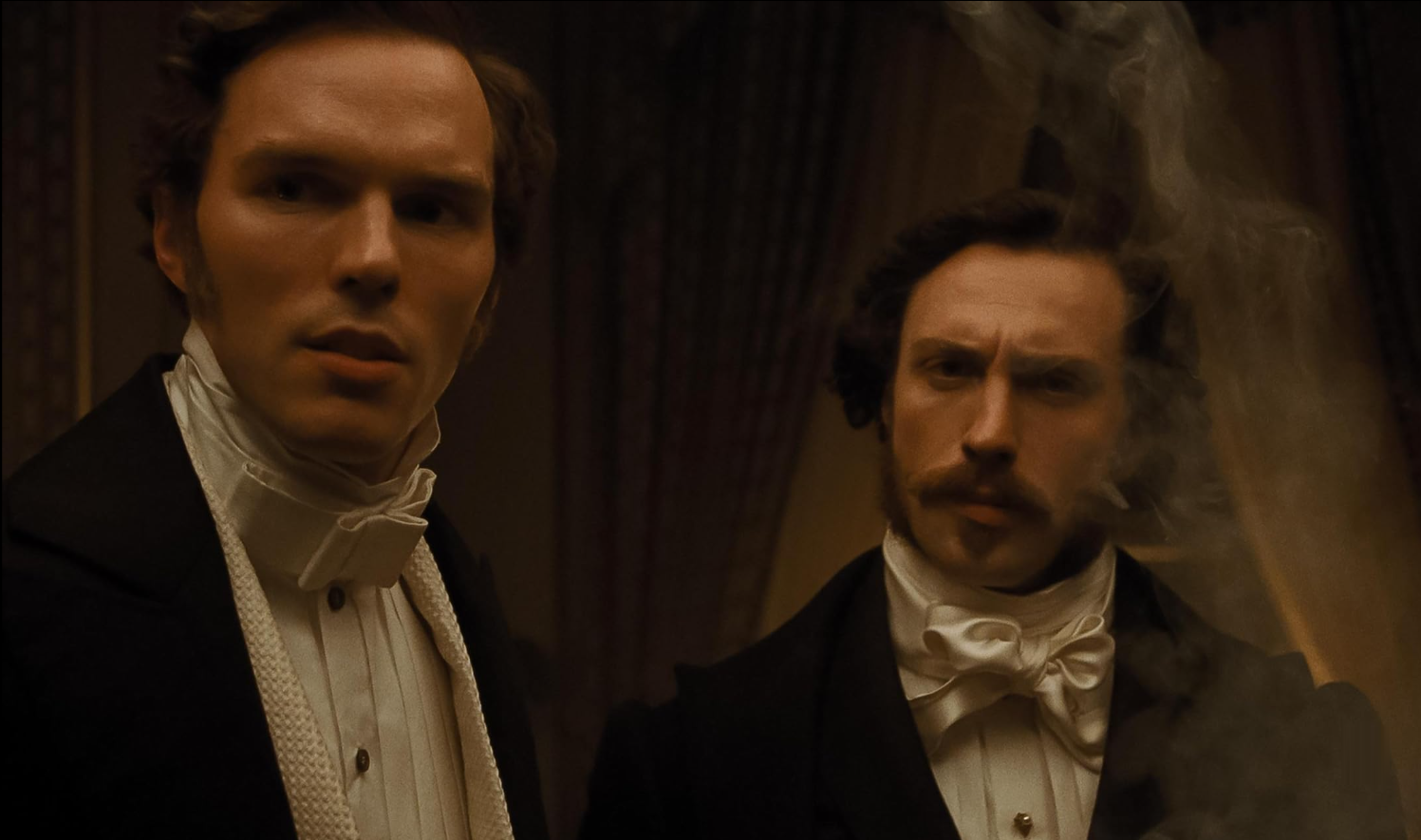
As I’ve said before, I don’t like horror movies, so to the large extent that this is one, I was predisposed to dislike it. And I did, for the reasons elaborated above as well as these: Eggers relies way too much on process shots when depicting urban scenes; whether this was a use of “AI” or not, these scenes have an uncanny look, and I mean the “uncanny valley,” not an uncanny sense that a horror movie might properly have. Secondly, the accents are both unplaceable and sometimes incomprehensible. And finally, what I found most annoying is Eggers’ overuse of the 180-degree pan. For example, he shows a character reacting to something they see, and then you see what they’re reacting to. But instead of doing this with two opposite setups like in every movie ever, Eggers spends time panning along a wall, brrrrrrrr… until you see what the character is reacting to. This should be done, at most, once in a film, to add tension to an already-tense scene; Eggers does it something like 8 or 10 times. I lost count.
But the things I disliked are just a reflection of my personal taste; your milage may vary. I’d much rather talk about the things I love about the Herzog film, starting with Klaus Kinski.
In 1979, Herzog’s work had already familiarized American audiences with Kinski, a unique and powerful screen presence who had played characters as diverse as a Spanish conquistador (“Aguirre, the Wrath of God”) and an ineffectual, mad German soldier who murders his fiancé (“Woyzeck”). (In fact, Kinski’s filmography includes dozens of spaghetti westerns and war films and goes back to the 1950s.) I remember how my friends and I heard, in 1979, that a new Herzog film starring Kinski as Dracula was coming out; our reaction was something like “Oh boy, can you believe that! This is going to be amazing.”
Reader, Herzog’s film did not disappoint. Kinski’s takes are unmoored, as he rolls his eyes up to the ceiling, or grimaces off to the side for some unknown reason. If one mark of a good actor is that you can’t stop watching them because you want to know what they’ll do next, Kinski is fantastic. And his counter-intutive touches — his hesitant demeanor, his seeming gentleness — contribute to this magnetism. Skarsgård’s Orlok, by contrast, is all one note, a hulk with a menacing growl.
I think what raises Herzog’s work above this year’s version, despite — or because of — the new film’s budget of many times the earlier version1, is its poetic quality combined with a necessary economy. As I pointed out above, Herzog doesn’t waste time on housekeeping scenes,2 but he draws out dramatic ones. His cinematographer Jörg Schmidt-Reitwein, who shot many Herzog films in the 1970s and 80s, understood that whenever Kinski was onscreen his specter would hold the audience’s attention. So a scene in which Dracula tries to hide his excitement over the sight of a few drops of blood after Harker cuts his finger, then suddenly advances on the man — unaccompanied by music — is riveting. The poetry resides in the images, in their primacy — which by itself is a tribute to Murnau’s silent version.
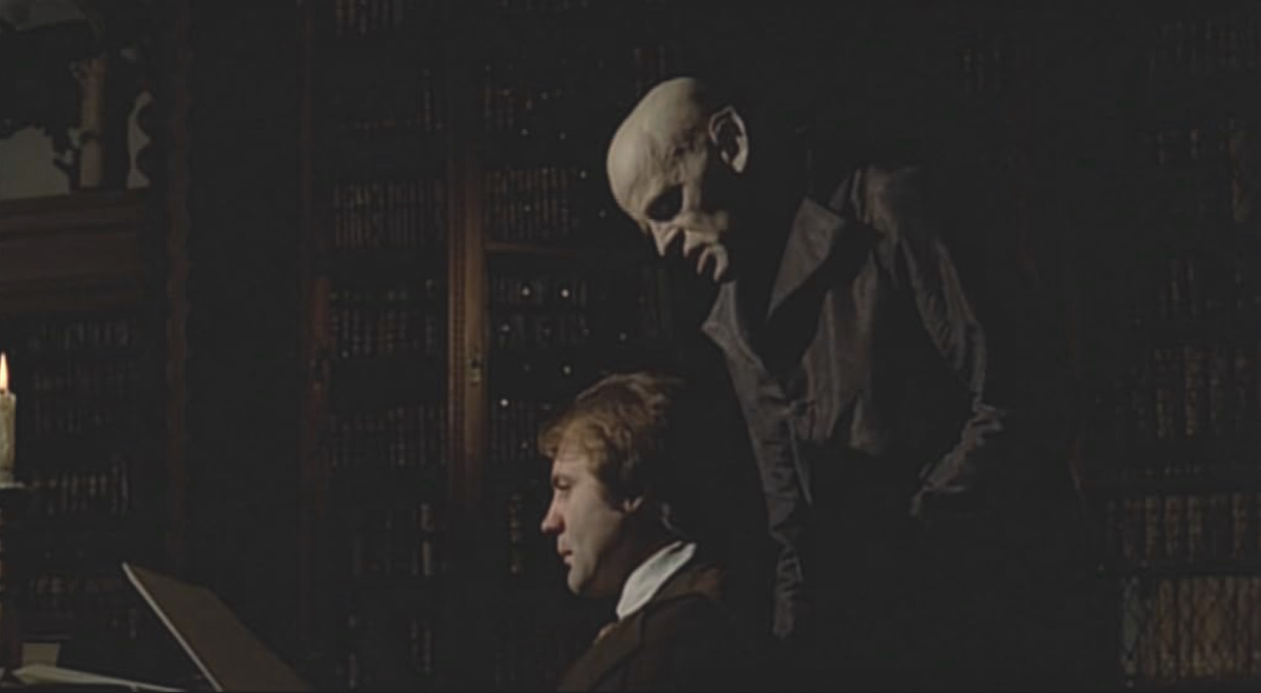
European directors had previously discovered the actor Bruno Ganz, whose gentle demeanor and large soulful eyes perfectly fit the well-meaning but clueless Harker. He is perfect in the role, while Nicholas Hoult, who plays the parellel character in the new film, is merely adequate. And Isabelle Adjani, who went through an unfortunately short vogue during the 1970s, performs really well here; she wordlessly projects the combination of horror of and fascination with Dracula that her character must feel in order to do her job as the ultimate victim of / victor over him.
Herzog’s film is also superior because of what it does not do. It does not use music all the time to dramatize the action. It does not overextend scenes (to name another example, the scene in the inn where Harker/Hutter stops before arriving at Dracula’s castle). It does not use process shots for scenes with dozens of extras; it uses extras. These aspects weren’t obvious until the Eggers film came along to highlight them.
Is there any aspect in which the new film clearly stands out above the Herzog classic? I’ve already mentioned that Eggers’ Count Orlok is more compellingly horrifying than Herzog’s. And the new version does carry more of an overwhelming sense of dread: the prospect of its Count’s victory seems to carry an existential weight, whereas Kinski’s vampire seems like he’s just trying to satisfy his thirst. Of course, manufacturing dread is the whole point of horror movies.3 Essentially, these are really different movies, despite having nearly identical plots, settings, and characters. “Nosferatu” 1979 is a dramatic film centering on characters, directed by one of the all-time greats. And “Nosferatu” 2024 is a horror movie.
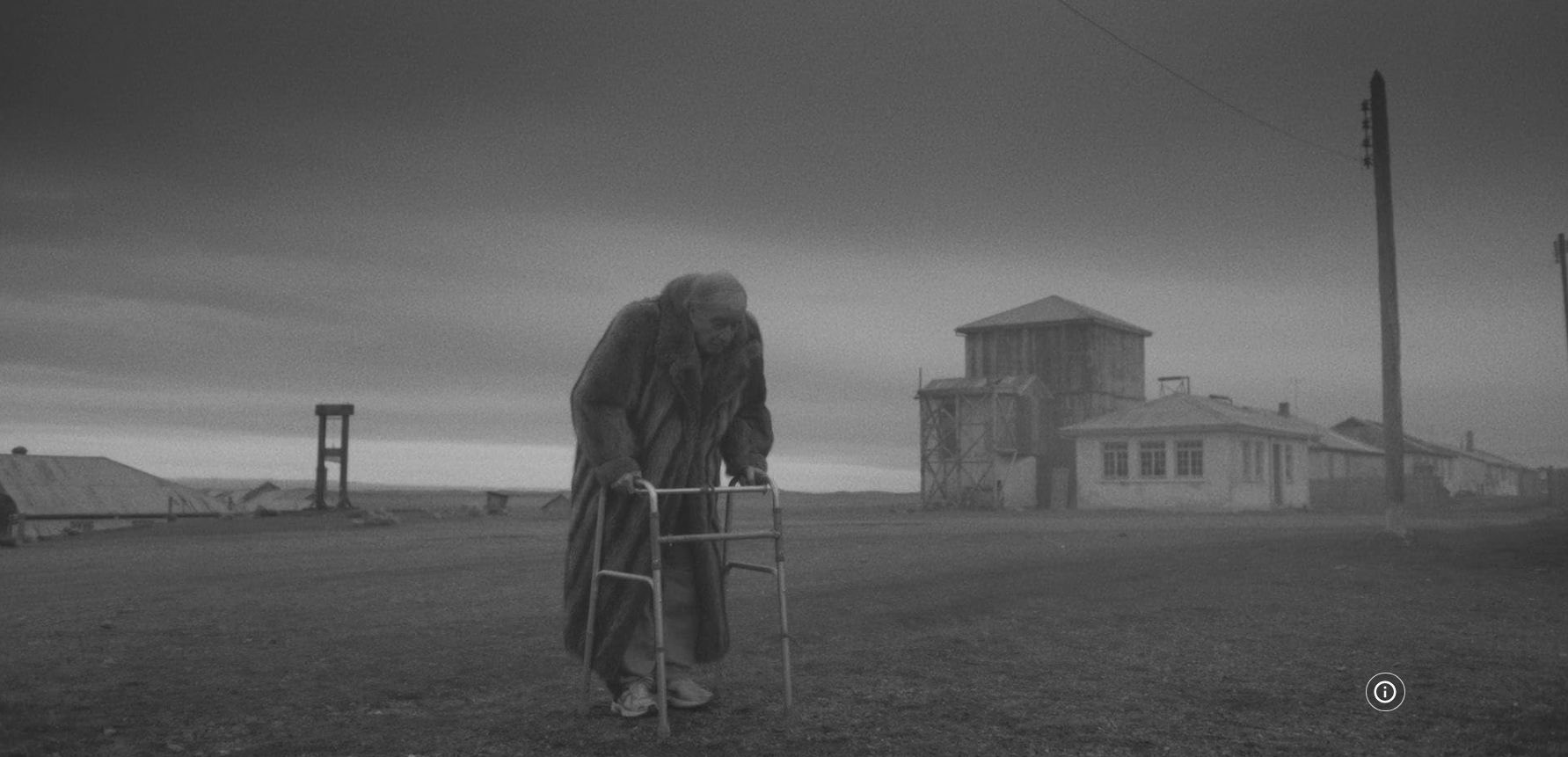
But back to the main point. A couple of years ago, Chilean director Pablo Larraín depicted the deposed dictator Augusto Pinochet as a vampire in “El Conde,” a compelling examination of the criminal mind, the banality of evil, and the pertinacious aspect of fascism, in that it is always waiting to emerge when society is at its weakest. Larraín’s vampire doesn’t want to rule the world, or even a small South American nation, not anymore. He wants only to die, actually, and can’t seem to figure out how. Then his grasping children come to visit, asking where he hid all the money that dictators are known to sock away as they rape their country year after deadly year, and bringing with them a nun-cum-accountant to help sort out the books. She lights a spark in the ancient vampire’s heart, with consequences for everyone except the vampire himself who, as it turns out, can’t die after all.
Thinking about this film, I remembered that while dictators like Pinochet steal from their countries and deposit the funds in offshore accounts, they usually do so with the collaboration of foreign powers — American, European, and (more recently) Chinese or Russian companies that take the country’s resources away and kick back a nice sum to the ruler, who distributes portions to the cronies and generals who maintain his power and control. That’s the point. You know how people keep saying “Cruelty is the point”? No, it isn’t. Cruelty, rape, murder, imprisonment, torture, exile — all these are merely tools of the ruler.4 The point is money. It always will be.
So next month when ideologues like Stephen Miller try to make good on those pledges to deport 10 million people, there’s going to be pushback from the corporations and hedge funds who profit off the labor of undocumented workers. When others try to eliminate various governmental departments and agencies, such as the FDA, you can bet they’ll be hearing from drug manufacturers and the health care system that profit when the FDA does its job.
Not that that will protect anyone vulnerable, of course. There will be chaos. It will not go well for anyone — neither the farmworker or the beef lobbyist, neither the baggage handler or the airline’s investors, neither the retiree nor the CEO of the health plan that denies her coverage.
But Trump? If history is any guide, like all true vampires he will always emerge unscathed.
According to the Wikipedia pages for each film, Herzog’s “Nosferatu” was made for $1.4 million USD, Eggers’ for $50 million. Even accounting for inflation — 73% from 1979 to 2023 — it’s clear that Eggers spent more than 20 times the 1979 film’s budget. ↩
I use this term to mean scenes like the one I described above that cover necessary plot points without being in themselves dramatic. ↩
I am continually surprised that Americans seem to suffer from a dread deficit. Otherwise why would they waste a beautiful day sitting inside cowering at a projection screen? ↩
Of course, the reason these tools work is that for the lower individuals who weild them, often cruelty is indeed the point. ↩