Review: Novocaine (2025)
Somewhere on the scale from gratuitous violence to cartoon violence to slapstick
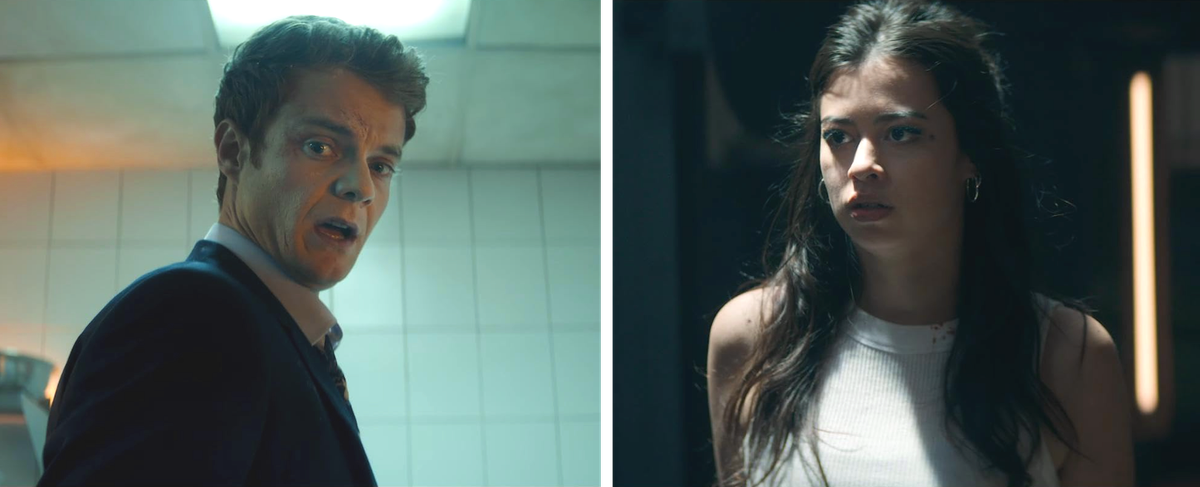
Novocaine (2025)
Directed by Dan Berk and Robert Olsen
You’ve heard of that rare genetic disorder which gives the people who have it the inability to feel pain. While this may seem like a sort of superpower, it means that the people who have it must be extremely careful not to hurt themselves, especially when it comes to burns and cuts that a normal person would react to instantly. It also means setting an alarm to remind yourself to use the toilet; otherwise you might forget to until, well, you get the idea.
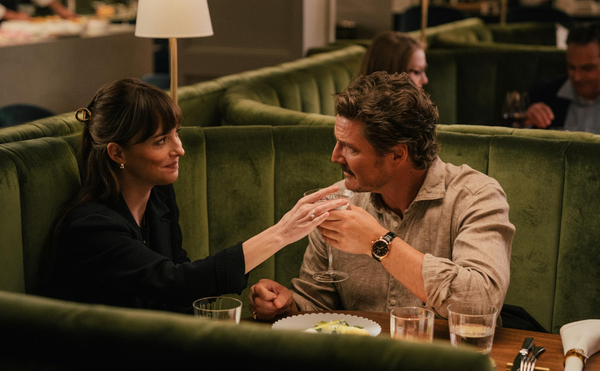
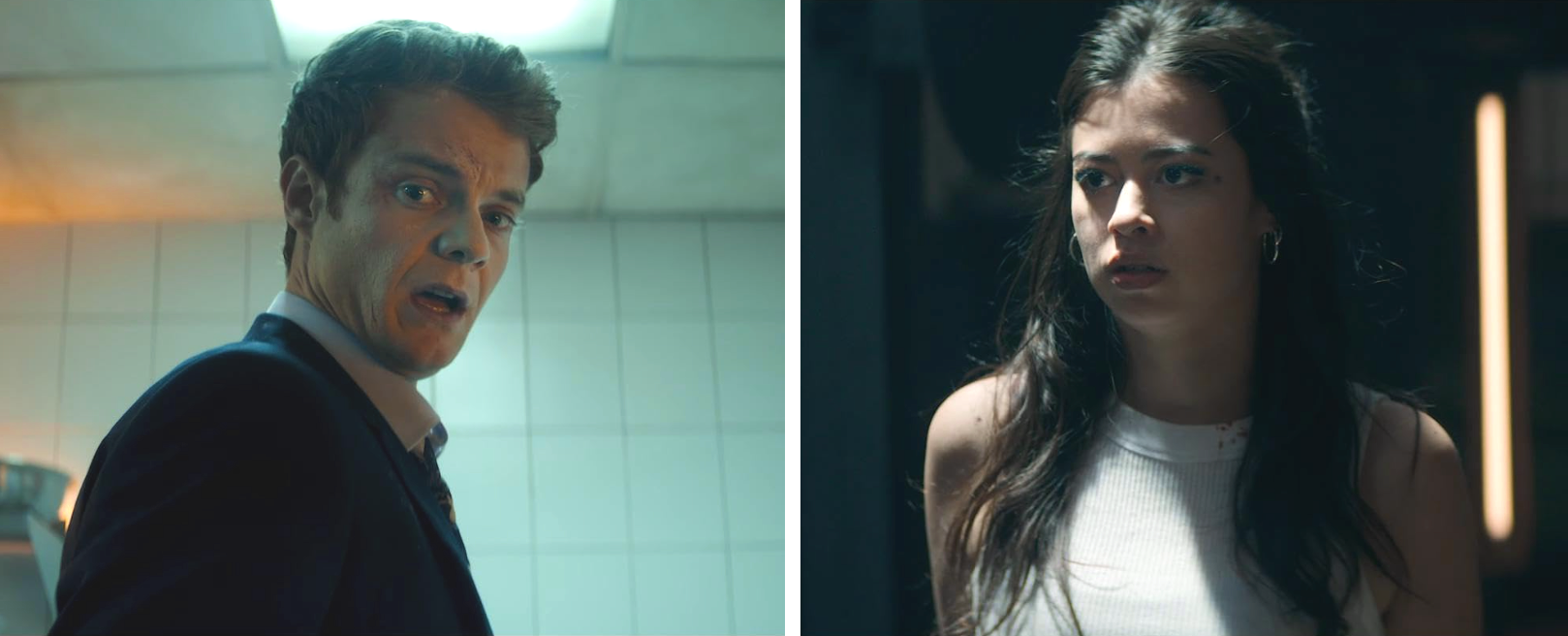
At least that’s how Nate (Jack Quaid), a mild-mannered bank assistant manager, approaches life: with extreme care. So when the extremely hot new teller Sherry (Amber Midthunder, who resembles Aubrey Plaza only with really plush lips) comes on to him and gets him to live a little, he's a sucker for her charms. For the first time ever, he eats cherry pie (“This is pie?! Oh my god!”), and later on the date, metaphorical cherry pie. (This isn’t shown, but the character of Nate is written as a thoughtful, nice guy, so it seems like he’d be down for it.) The next day, the bank they both work at is robbed by a trio of really violent guys in Santa suits (like that’s never been done before). They get Nate to give them the vault combination by threatening to shoot Sherry before grabbing all the cash and taking her hostage.
It all happens a little too fast for the viewer to question what’s going on, which is a good thing, because if you thought about it all too hard you might question Sherry’s motive for suddenly coming on to a manager at work, or the manager’s apparent complete lack of sexual harassment training, since he doesn’t question it either.
Meanwhile, Nate has stolen a cop car and pursued the robbers, intent on saving the only girlfriend he’s ever had. Along the way, he gets into an increasing number of violent situations that have him getting shot, plunging his hand into a deep fryer, and being struck on the face, on the head, and all over the body over and over again without feeling pain. Somehow all the mayhem he endures fails to cause massive bleeding or internal injury, nor does he have to go to the head during this very busy and violent day, but don’t question that either, it would just spoil the fun.
And it is fun, to a point, because it's increasingly played as a comedy. It has to be, because to keep things interesting, the filmmakers have to keep upping the ante when it comes to subjecting the protagonist to violence. Eventually, long past the point where the violence felt threatening — at least to the characters — it goes past being cartoon violence, arrives at slapstick, and ventures into the absurd. About this time, when he was tripping booby traps at the residence of one of the robbers who seems to be a medieval weapons geek, Nate gets struck by a spiked mace and shot by a crossbow. I could see where it was all going and I left, about 75% of the way through the movie.
What I wondered about, as I walked to my car, was not the character of the violence on the horror-to-slapstick continuum, but the character of Sherry. Spoiler here: she’s in league with the bank robbers, one of whom is her brother, and seducing Nate was part of the plan. (His imperviability to pain and his wild attempt to rescue her were apparently not part of the plan, which makes me wonder how well these robbers really researched their target.)
This plot twist is meant to provide an explanation for why this hot young woman would launch herself at this ordinary, unimpressive guy. But it doesn’t explain why the film relies on such tired tropes about gender and sex in the first place. To unpack: The plot point is based on acceptance of the sexist trope that women and men have high or low value in the sphere of dating — which sexists can’t help seeing in capitalist terms as a sexual marketplace.
Sherry is coded as having high value; Nate is, if not low value (he does have a job and no bad habits, which has to count for something), certainly not entitled to even pursue someone as hot as she is. In these terms, there has to be an exterior explanation for her seducing someone like him, and the plot provides it: she only does it because she wants to soften him up, so that when the bank robbers threaten to shoot her if Nate doesn’t give them the combination to the vault, he does so.
So the business of Nate’s inability to feel pain is simply a comic element that has little to do with the plot, which turns on this question of why — to use the terms that the intended audience would — a hot girl would fuck a guy whose value in the sexual marketplace is so much lower. Not that this is an unusual premise in movies. But here it struck me as retrograde and adolescent. Ascribing relative value to other people or seeing relationships as transactional are social norms related to capitalism, a system we inhabit like fish live in water. More than an economic system, capitalism underlies most of our social relationships as well. When we’re in high school, it seems natural to see ourselves in terms of our relative value to others whom we might wish to, or deign to, date. Applying this template to adult relationships strikes a mature person as juvenile.
That fits the intended audience for this picture: young men and, ideally (to the young men) their dates. What their dates might think about the premise is something they’re likely to hide, or else they’d have to talk about it later on at Pizza Hut or wherever high school kids on dates go after the movies.
Maybe that’s the trick to enjoying so many movies: imagine you’re among the indented audience. There must be a trick to this that I’ve forgotten, or else I wouldn’t walk out of many movies twenty minutes before they end.