Review: The Canyons (2013)
Unpleasant thriller-like artifact, starring Lindsay Lohan, that's less a movie than a curiosity
Me, a student journalist, at a 1977 film festival: Did you have any problems directing Judy Garland in “A Star is Born”?
George Cukor (to the room in general): Who is this kid?! All he wants to talk about is problems, problems!
The Canyons (2013)
Directed by Paul Shrader
Written by Bret Easton Ellis
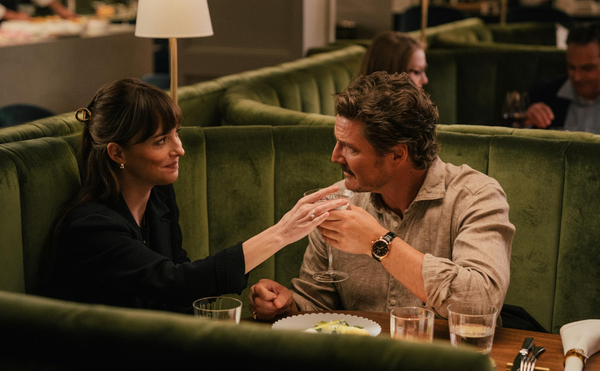
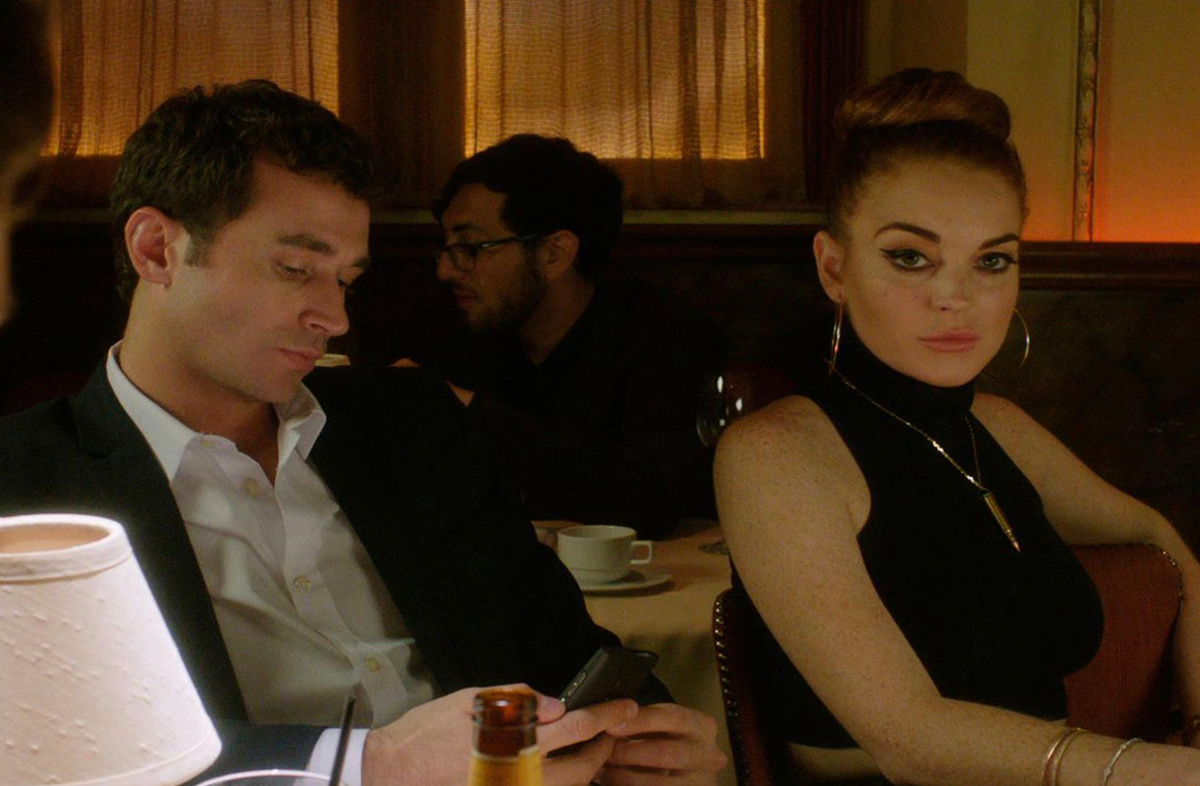
In this thoroughly unpleasant, soap-opera-ish thriller, former teen movie pop star Lindsay Lohan plays Tara, a vapid, insecure woman who'll do anything to hang on to her even more insecure, actually evil, but good-looking trust fund boyfriend Christian. Christian is played by another sort of pop star – in fact, a porn star whose screen name is James Deen. More about him later.
When I say Tara will do anything, it includes accepting an endless shitload of bickering, gaslighting, and aggression from Christian. It includes submitting to his peccadillo of inviting strangers to come to his fancy hilltop house and use Tara as a plaything while he captures the action on his iPhone. It includes pretending she doesn't know that he has actually murdered another woman who tried to undermine his hold on Tara.
So no, this is not a comedy like those Lohan had been appearing in since childhood (if the word "childhood" can be used to describe the life state of a tween pop star). It's more of a thriller – but in the sense that “American Psycho” (by the same author, Bret Easton Ellis) is a thriller: a story in which a psychopathic, low-affect, smarmy, but rich man takes refuge in outbursts of violence when the extraordinary privilege that society grants him occasionally fails for a moment, giving him a glimpse into a larger world where he can’t control everything.
That Christian desperately needs to feel in control all the time is – as if viewers haven’t already noticed – baldly stated in the third act by Christian himself, in a scene with his psychiatrist (cameo from the director Gus Van Zant). Daddy issues are the explanation, but that’s the problem with movies that give the bad guy a backstory that explains his cruel character: such explanations run the risk of being read by audiences as justifications.
It’s really a chronic problem in movies -- most movies -- where screenwriters rest on the trope that villains are more interesting than upstanding people. According to this trope, the villain can be bad in many ways, but the good person can be good only in a boring way; and the absurdity of the latter proposition is obvious. Take a look at “Wildcat,” the terrific Flannery O’Connor biopic directed by Ethan Hawke: it shows the famed American writer struggling with the notion that her agonizing suffering from lupus had to be somehow spiritually uplifting (the supposed spiritual benefits that sick people get from suffering is, of course, its own trope).
When the central character is generally a good guy, the only-bad-characters-are-interesting trope is often altered to have the good guy choose to do something actually bad — to choose to defect, in game theory terms. One can see this trope in other works from Shrader’s filmography. In “First Reformed” (2017), a pastor (Ethan Hawke) dons a suicide vest, intending to destroy a church that seems to him (though this is presented by Schrader as mental illness and not heroism) to be dominated by idols of money, success, and influence. In “Taxi Driver,” (1976, directed by Marin Scorsese and written by Shrader), where well-intentioned Travis Bickle – an anti-hero if there ever was one – resorts to climactic violence to free a young teenager from her pimp. A current film (though a bad one) that uses this good-guy-goes-to-the-dark-side trope is “Bonhoeffer,” a biopic that exaggerates the elements in the life of theologian Dietrich Bonhoeffer that suggest his change from a pacifist stance to an active one — he joins a plot to assassinate Hitler — is morally justified. (Again, it’s not a good movie.)
I’m making way too much of this. Where was I? “The Canyons,” I was saying, is not exactly the erotic thriller it’s labelled as. It’s kind of a one-off in the careers of all the principals – Lohan, Shrader, Ellis -- even Deen the porn star, as he went right back to appearing in hundreds or thousands more porn films, all of which were undoubtedly more lucrative than his work in this movie.
In a way, “The Canyons” should be regarded less for its qualities as a movie and more as one of those pictures like "The Blue Dahlia," whose renown, or infamy, rests more upon the making-of stories than the quality of the final product.
In 2012, the internet had become inextricably woven into the lives of everyone of prime consumer age. Everyone had a mobile phone and had come to use it for everything: rides, dating, shopping, and (if you were young) texting. The technology was still young enough, though, to seem remarkable to anyone over 50; the headline on Manola Darghis's 2013 review of the movie1 is "The Cellphone Gets Its Closeup."
It's true that the movie’s plot focuses on the characters' use of the devices; also that the film's screenwriter, Ellis — once the transgressive young leader of the 1980s literary "Brat Pack" — was 48 years old when he wrote the script. Cellphones probably still seemed novel to him and to director Paul Shrader; the uses that the younger generation was putting them to, judging from the film, seemed to them louche enough to hang a movie on.
Anyway, Shrader was at the nadir of his career. The Great Recession had dried up all of the free-flowing money that had financed indy movies for the last 20 years. His previous movie, the forgotten “Adam Resurrected,” had been released in 2008. He had to make something happen or risk dropping out of the profession altogether. So he decided to crowd-fund a micro-budget movie and get similarly almost-washed-up nothing-more-to-lose professionals to appear in it. And Lindsay Lohan, a former child star and pop singer whose habit of disappearing for days had ruined her career, needed a project just as badly, a project where she could show she was capable of cleaning up her act.
These and other fun tales from the production of “The Canyons” are in a raft of magazine articles and interviews from the time of the movie’s release. And while it may be false that villains automatically make the most interesting characters, difficult film shoots definitely make the best making-of magazine features. The most comprehensive must be the New York Times Magazine’s “This is What Happens When You Cast Lindsay Lohan in Your Movie.”2
What does happen? Lohan disappears from the set unexpectedly, or doesn’t show up at all. She insists on changes that are the domain of the director or the crew. She manipulates others. She refuses to strip for a contractually agreed-to scene in which she and Deen have an orgy with another couple, and the only thing that shakes her out of her stubborn refusal to get on with it is when Shrader himself (then aged 66) strips naked and shouts “I want you to be comfortable. C’mon, let’s do this!” In the meantime, the most professional performer throughout the shoot was, of course, Deen, the porn star.
Again, the lore of the movie; the tropes of the movie — these are the fun parts to write and read about. I didn’t really enjoy watching it. The movie would not be fun to watch for most people, because despite a better-than-expected first feature film performance from Deen — he clearly understood the assignment — and the occasional sincere moment that Lohan manages despite herself; despite superior performances by unknowns Nolan Gerald Funk and Tenille Huston as erstwhile lovers of the other characters; despite being directed by Paul Schrader, who today is regarded as a near-great filmmaker — none of these attributes can balance out the dead feeling that comes from Ellis’s script. He’d already covered much of the ground — the psychopathy at the heart of hetero masculinity — in “American Psycho.” Christian greatly resembles that book’s main character (though he kills only one person here); for Ellis to resort to the type again just seems lazy and predictable. And if there was one thing this film was not supposed to be, it was that.